Demgy Pacific
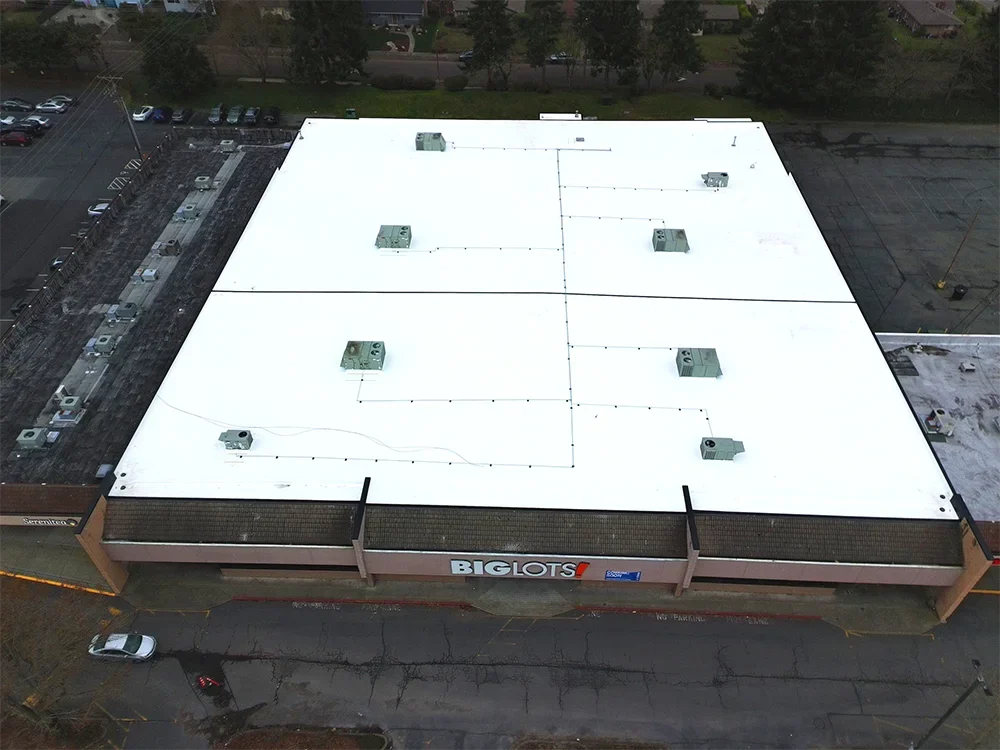
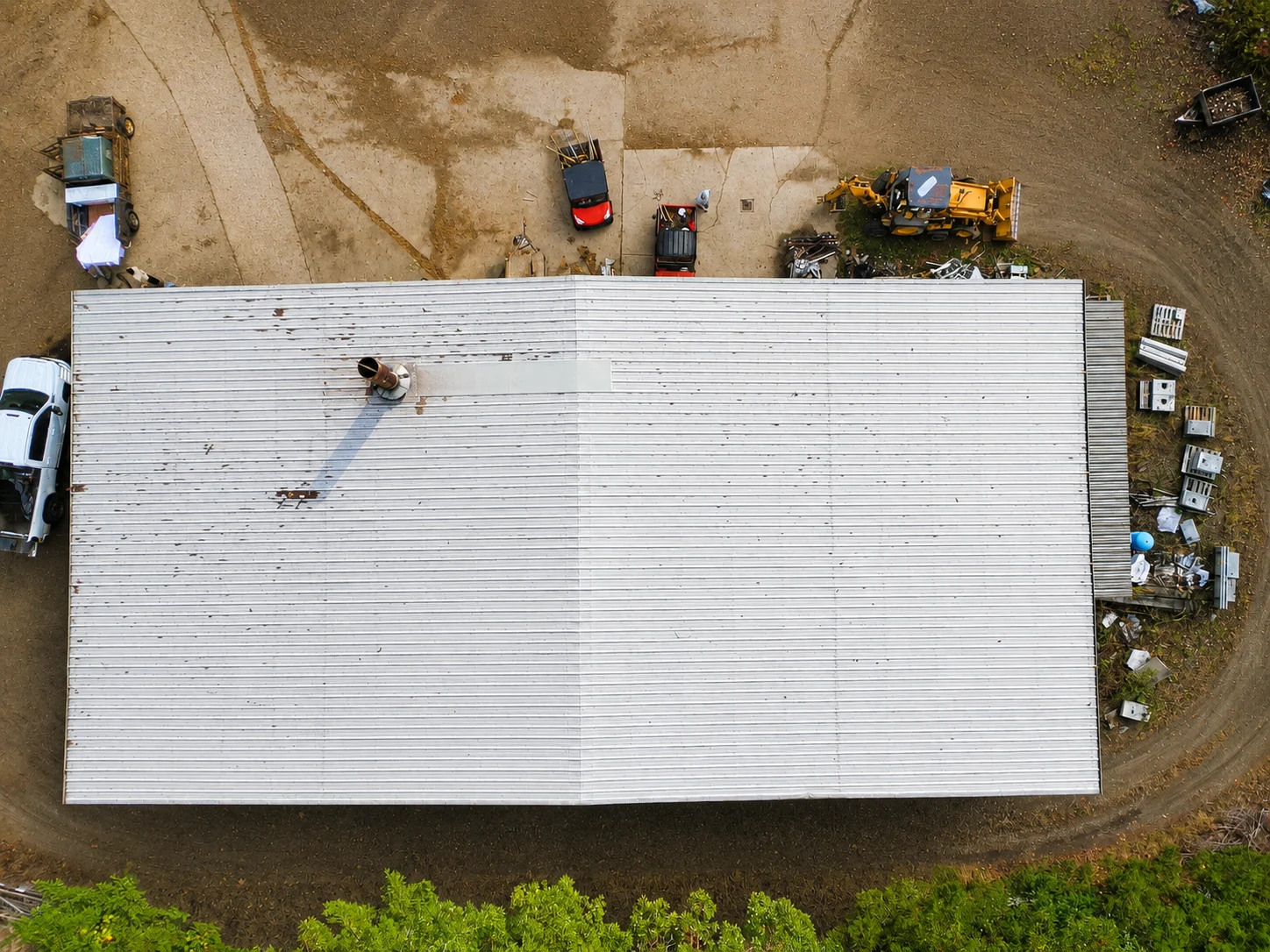
TPO overlay for a precision manufacturer of high-performance plastics and composite components.
View project →About Us

Seattle commercial roofing services with transparent pricing and fast project delivery. We handle permits, cleanup, and tenant notices. Call 206-504-1500.
Where to Find Us

Commercial Roof Construction in Seattle
Our crews remove the moss, debris, and buildup that shorten a commercial roof’s service life throughout Tukwila. Every job pairs a membrane-safe method with a runoff plan that satisfies the City’s stormwater rules.
Commercial roof cleaning is the removal of moss, algae, debris, and sediment from the roof surface and its drainage path. The work uses tools and products the membrane manufacturer’s warranty allows, which keeps that warranty intact.
A clean roof drains the way it was designed to, and a cleaning visit often surfaces the small seam or flashing issue that is far cheaper to fix now.
You need this service when:
Property managers often fold cleaning into a routine roof audit. Single-building owners tend to call after green streaks or a slow downspout show up from the ground.
We focus exclusively on commercial low-slope roofing systems. Every method gets checked against your specific membrane before it touches the roof.
Four situations tend to put roof cleaning on a Tukwila property team’s schedule.
Acting on them early keeps the work small, fast, and inexpensive.
Moss holds moisture against the membrane and can work into seams over time. Shaded north-facing sections and low-slope valleys under parapet shadow are where it shows up first in Tukwila.
It is worth a call before it spreads across the roof field.
Leaves and windblown grit build up fastest around roof drains and scupper openings.
Tukwila makes property owners responsible for keeping that private drainage clear, so a debris check protects both the roof and your compliance standing.
Buyers and lenders increasingly want photo documentation of roof condition before closing or renewal.
A cleaning visit ahead of that survey gives them a clear, accurate look at the membrane.
November through January bring the bulk of the year’s rain here. Whatever collected on the roof over those months usually shows up as staining or slow drains by spring.
A post-winter cleaning catches it before it becomes a repair call.
Every cleaning visit answers the same question: what is on the roof, and where does the water and debris go once we start removing it.
We locate every roof drain, scupper, and downspout before choosing a method, because that map decides what containment the job needs.

Sweeping and vacuuming clear loose debris from the surface and drainage path before any water gets introduced.

Low-pressure rinsing is matched to the manufacturer's guidance for your specific membrane or coating.
You receive before-and-after photos and a record of where the collected water and debris went.

We scope these assessment-dependent items with you before the work starts.
We determine whether wash water needs to be collected or redirected under Tukwila's stormwater rules and coordinate the disposal path.
We determine whether growth calls for a chemical treatment, which Washington requires a WSDA-licensed applicator to apply, and coordinate that plan.
We determine whether seams, flashings, or ponding issues found during cleaning need their own scope and coordinate the follow-up.
Weather data from the nearby Sea-Tac NOAA station shows about 39.34 inches of precipitation across 156 measurable-precipitation days each year. That near-constant moisture keeps moss growing and drains working overtime.
It is why a Tukwila roof needs cleaning on a more frequent rhythm than a roof in a drier climate.
November averages about 6.31 inches of precipitation near Tukwila, and cleaning treatments need a dry membrane to work.
We schedule chemical and wash-heavy cleaning outside the wettest stretch of the year whenever the roof’s condition allows it to wait.
July averages about 0.60 inches of precipitation, the driest month in the nearby Sea-Tac records.
That makes it the most reliable stretch for moss treatments and any post-clean sealant work that needs the surface to dry and cure.
Standing water at drains and low spots after a wet week is where debris and organic buildup collect fastest.
A clogged drain undoes a clean roof within one storm, so we check those points first on every visit.
Our cleaning process keeps the roof, the runoff, and the record organized on every visit.
We coordinate access and scheduling with your team so the building stays open while we work.
We locate every drain, scupper, and downspout, and note the roof system, its age, and any prior repair areas that shape method choice.
Sweeping and vacuuming clear the surface and drainage path first. On roofs with heavier buildup, this step alone resolves most slow-drain complaints.
We confirm the manufacturer's cleaning guidance for your membrane or coating, then choose a low-pressure rinse, an approved cleaning agent, or a licensed moss treatment, each checked against the containment plan.
Downspouts are blocked or disconnected as needed, wash water goes to an approved disposal path, and larger roofs are cleaned in sections so containment stays manageable.
We document the finished roof, flag anything that looked like a seam or ponding issue during the work, and confirm where the collected water and debris went.
Tukwila supports more than 40,000 jobs, with roughly one-third in retail and another third in manufacturing. The roofs over that mix collect moss and debris in different ways, so we plan each cleaning around the building underneath.
Guest and tenant comfort depends on quiet, contained work, so cleaning crews follow the same daily-cleanup standard we use on installation projects.
Nobody downstairs should notice we were on the roof except that it drains better.
Large flat fields mean more drains and scuppers to track, and production schedules that cannot pause for roof work, so cleaning gets phased across sections.
Aerospace and precision sites add rooftop equipment and stricter access rules, so containment is coordinated around that equipment from the start.
Storefronts around Southcenter collect windblown debris and grease-laden air from nearby food service, both of which accelerate the buildup a cleaning visit removes.
We schedule around store hours and the customer foot traffic below.
Shaded residential roof sections are where Tukwila moss takes hold first, and cleaning over occupied homes runs with advance notices and quiet hours.
Downspout control matters doubly here, since residential drainage often ties straight into the site’s storm system.
As a reliable commercial roof cleaning company, we support more than the cleaning visit. We remain available for maintenance, repairs, and future upgrades whenever a cleaning turns up something bigger.
Here are the other services we provide around the Tukwila area.
New commercial roofing systems for new builds, additions, and major property improvements.
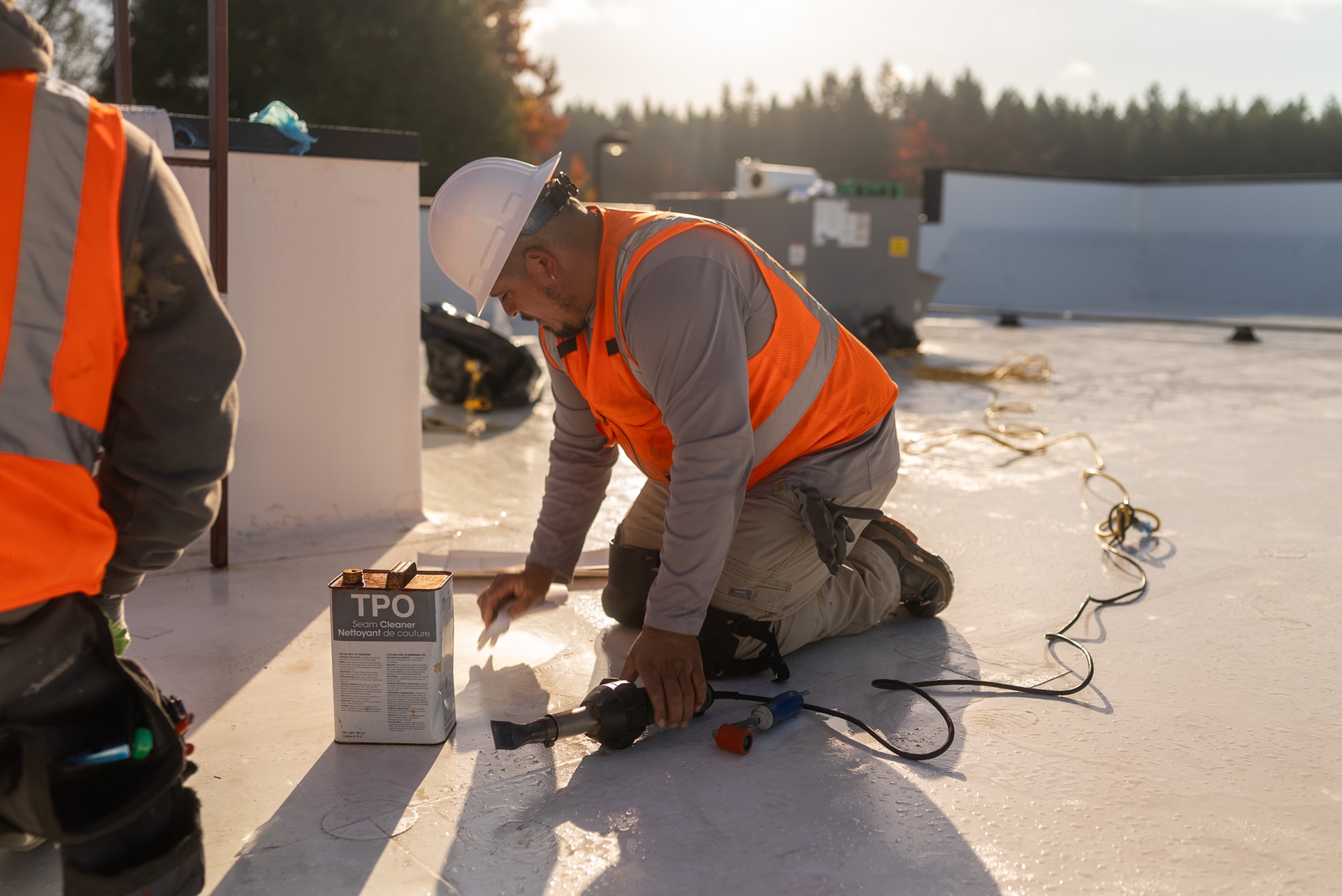
Full replacements for aging and failing commercial roofs.
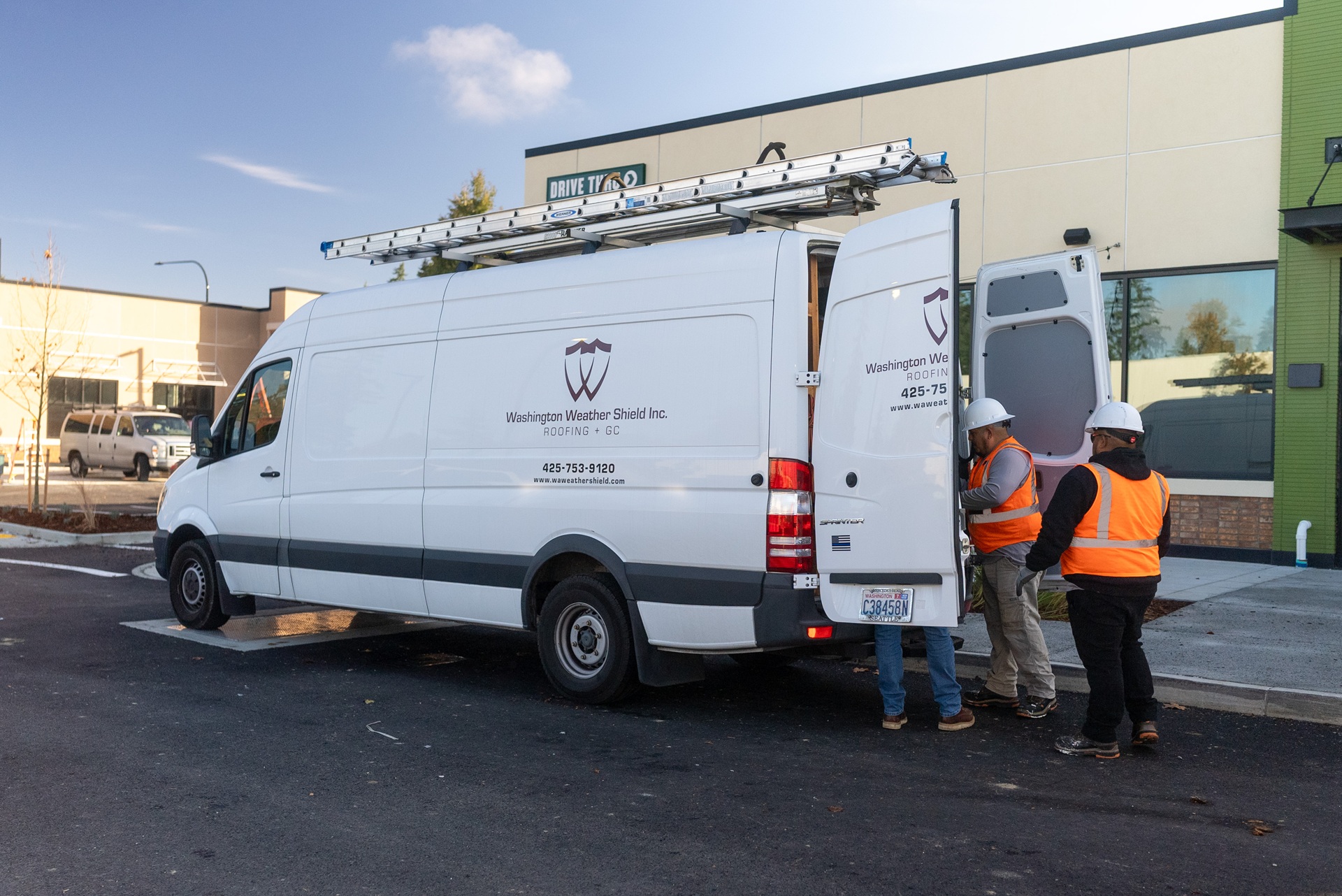
Targeted commercial roofing fixes that stop leaks and prevent further damage.
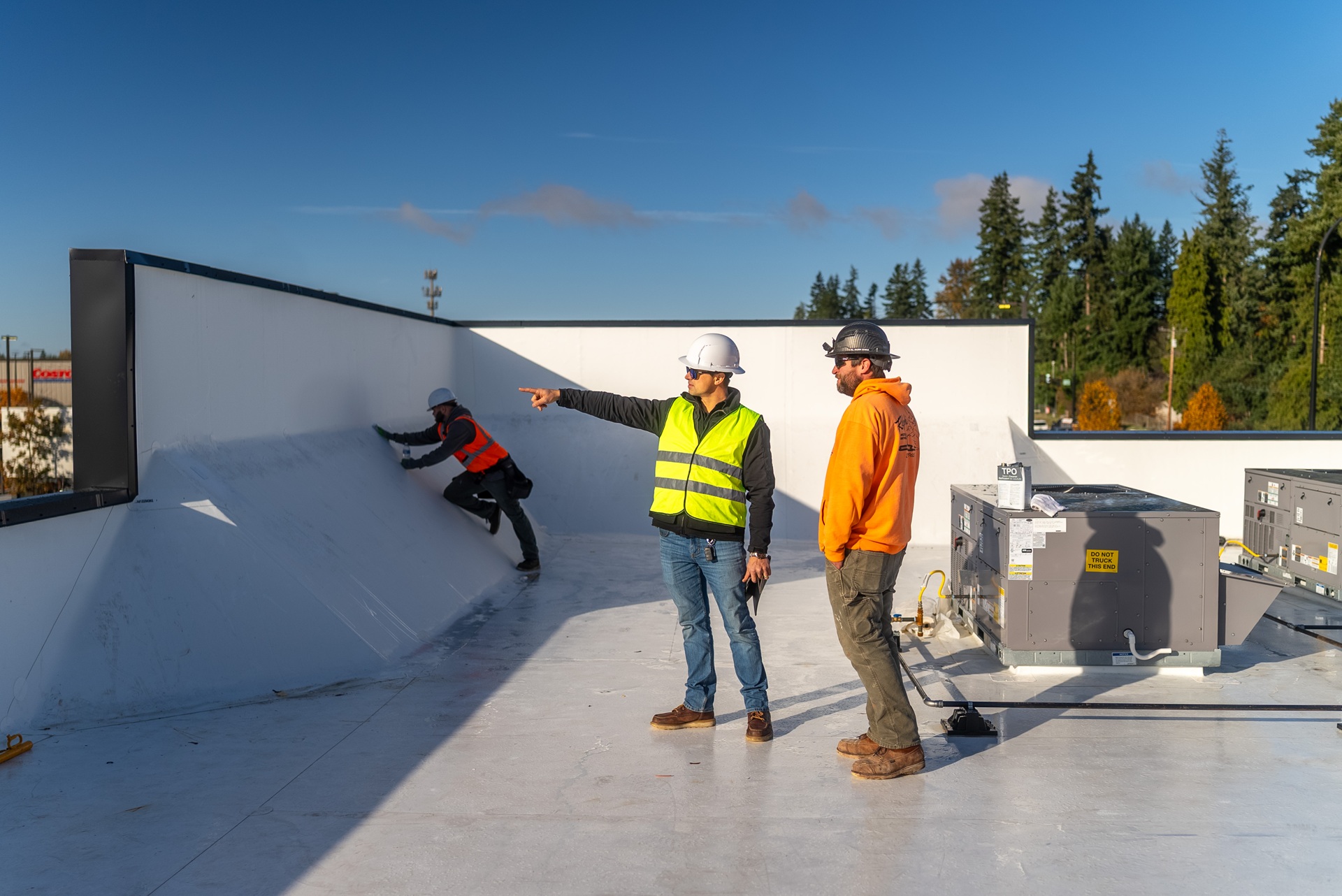
Commercial roof insulation installation for commercial buildings following the Washington State Energy Code.
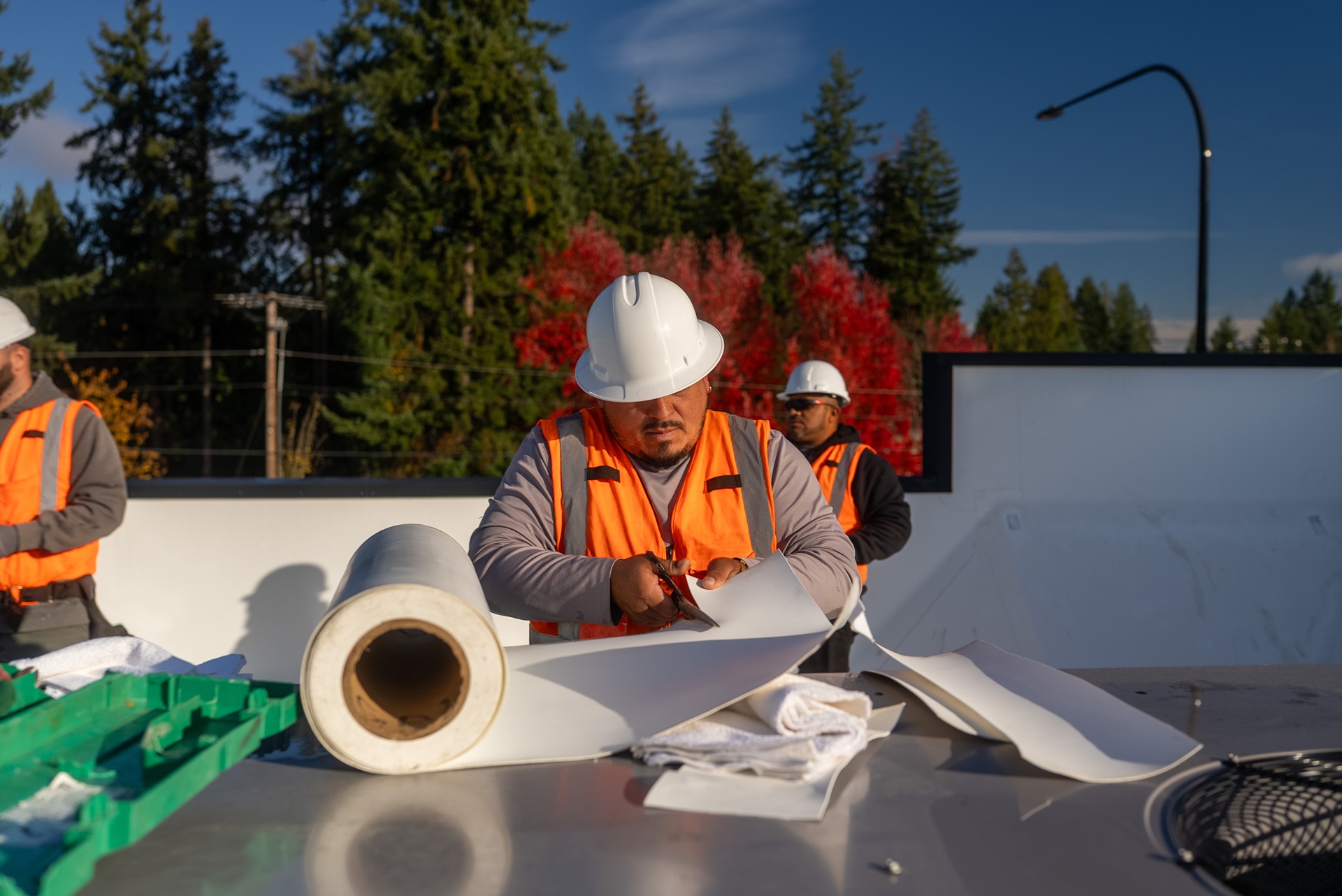
This commercial roofing service is for urgent leaks, storm damage, and unexpected failures.
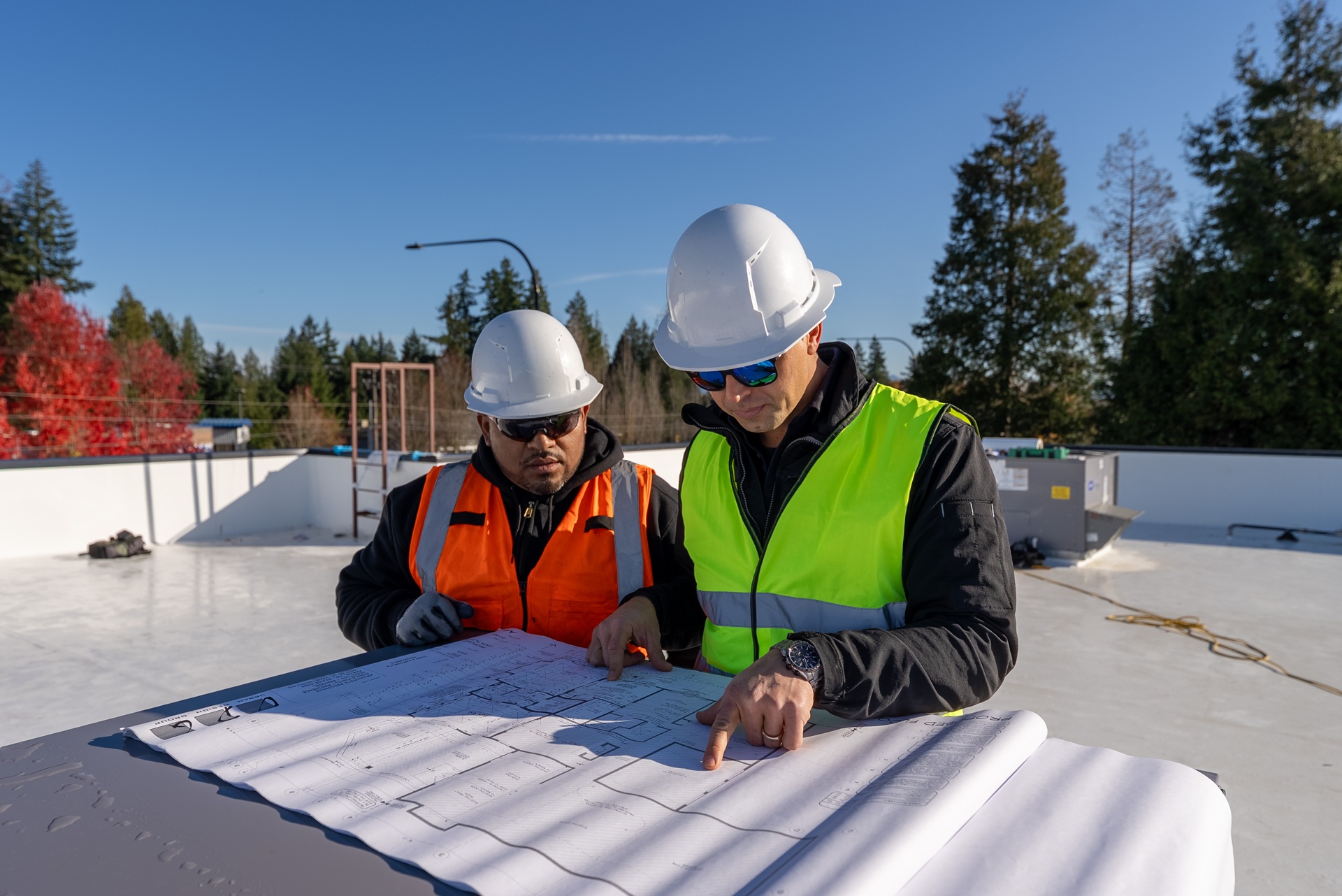
Routine commercial roof maintenance that catches issues early and extends roof life.
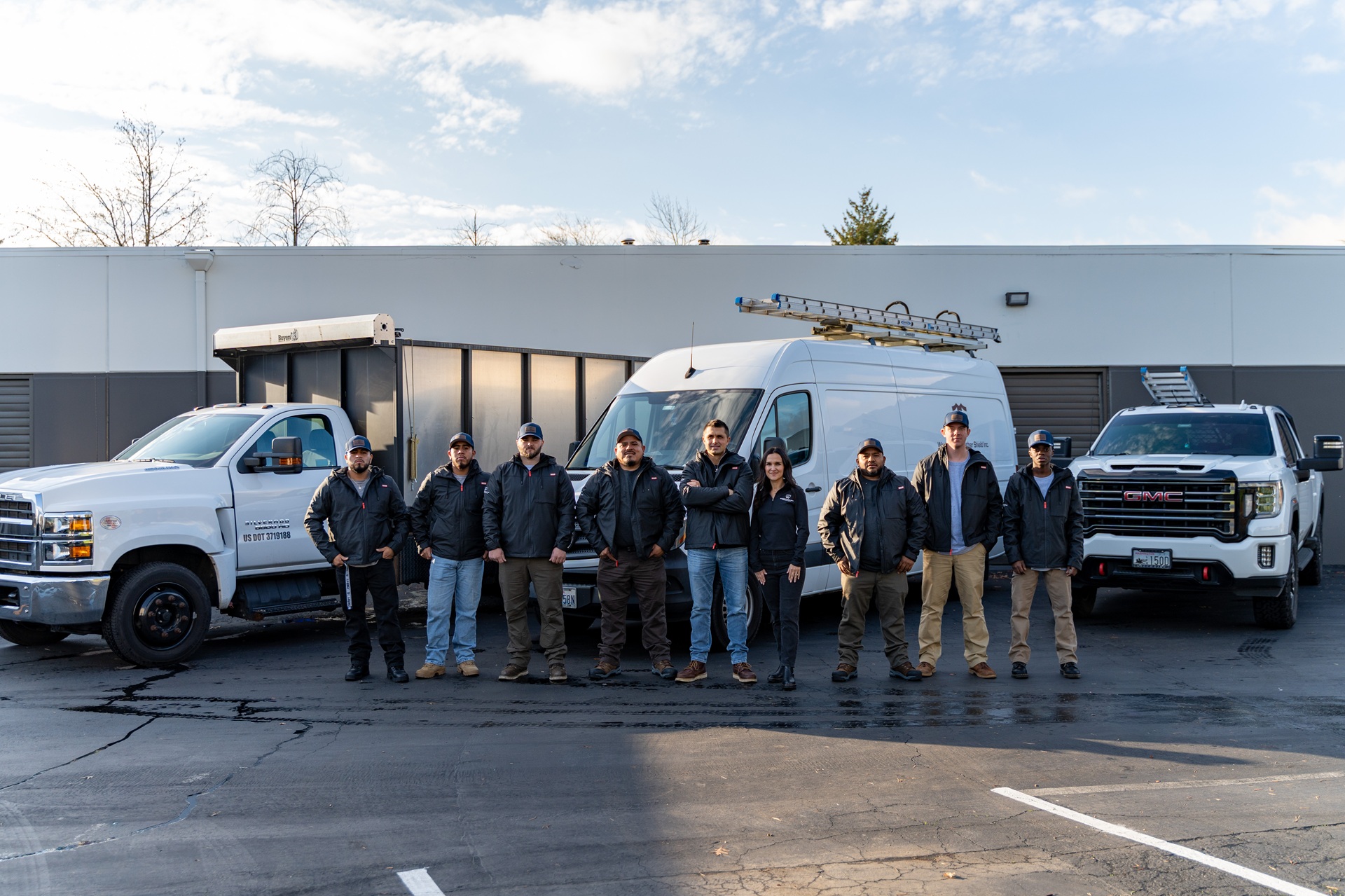
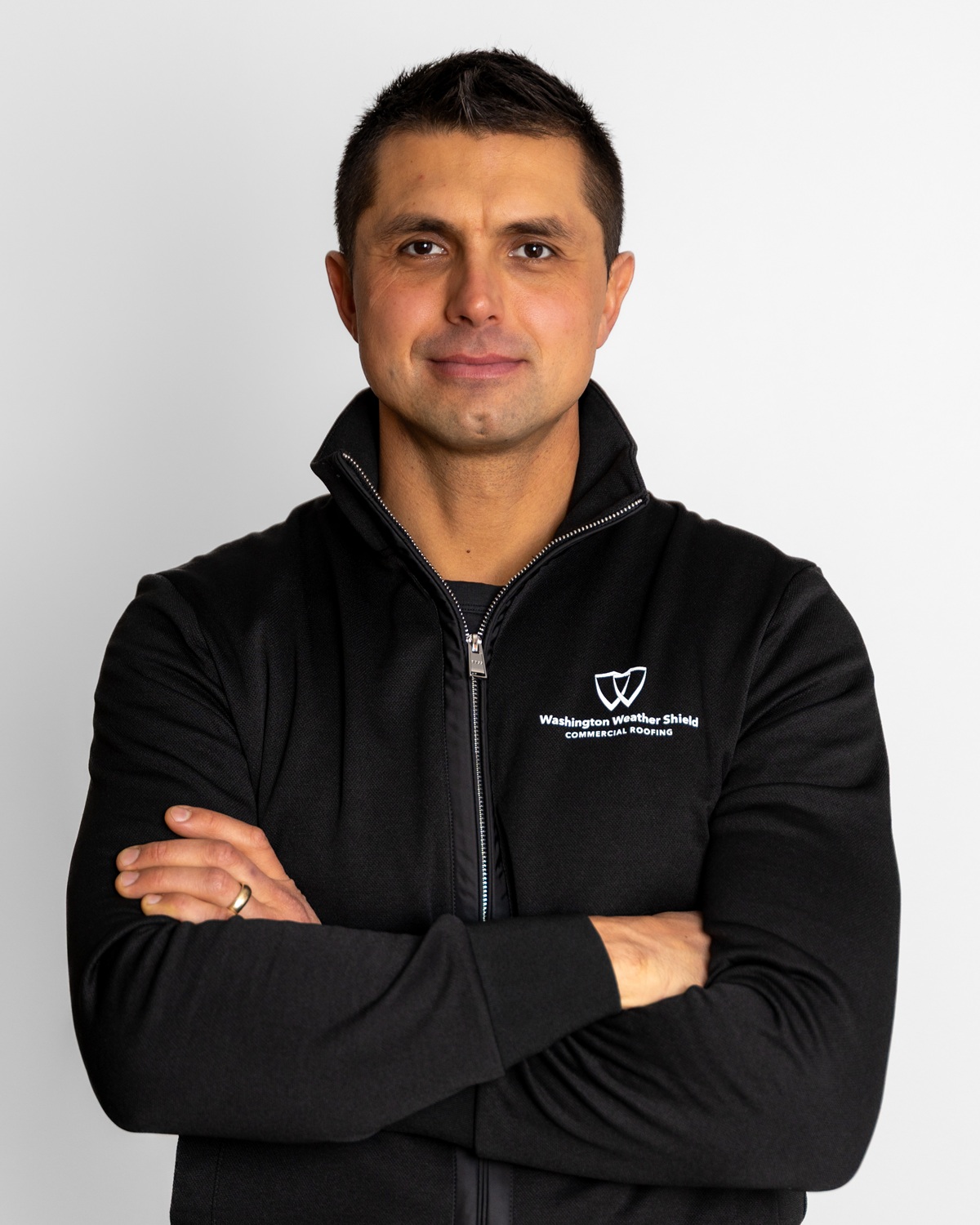
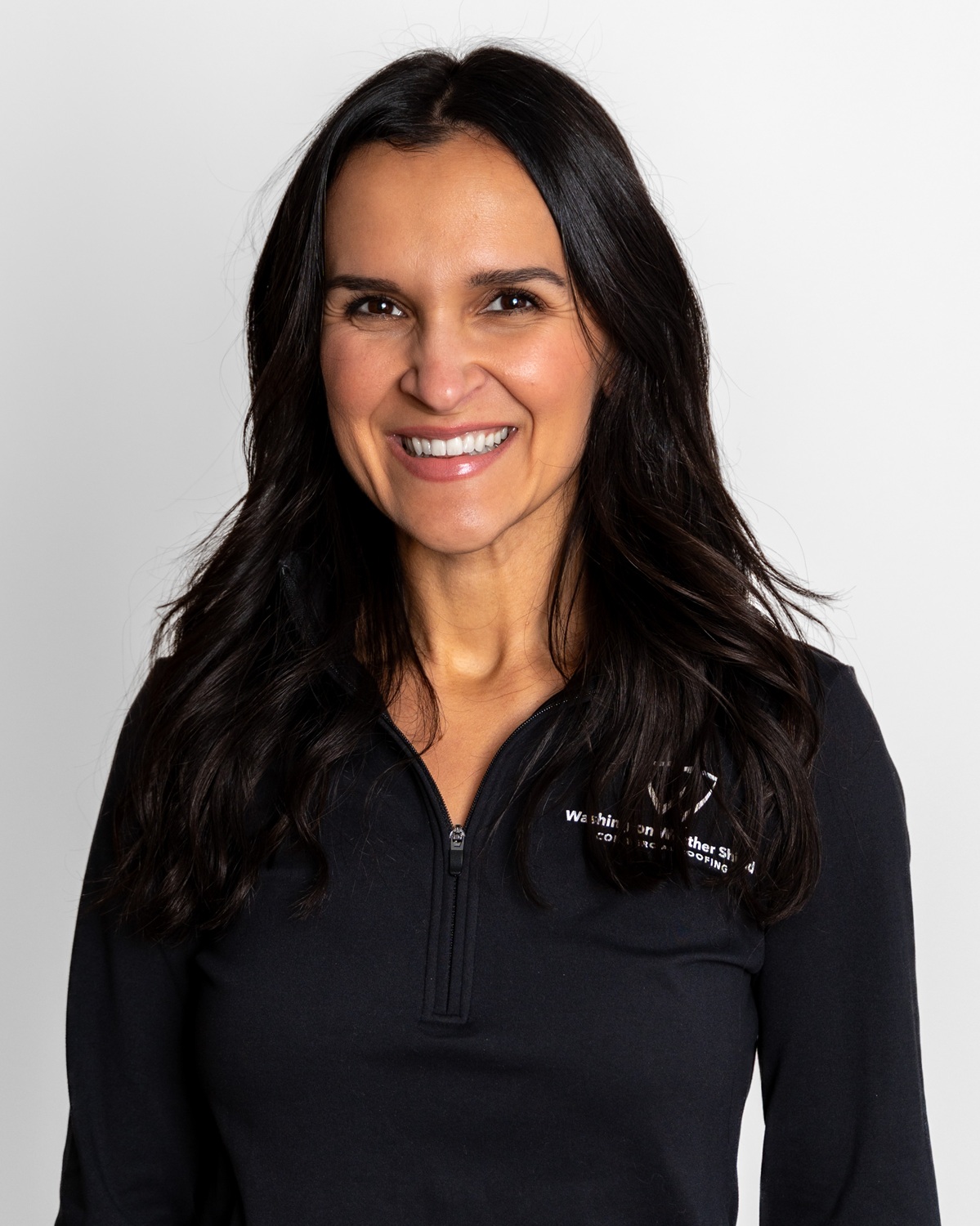
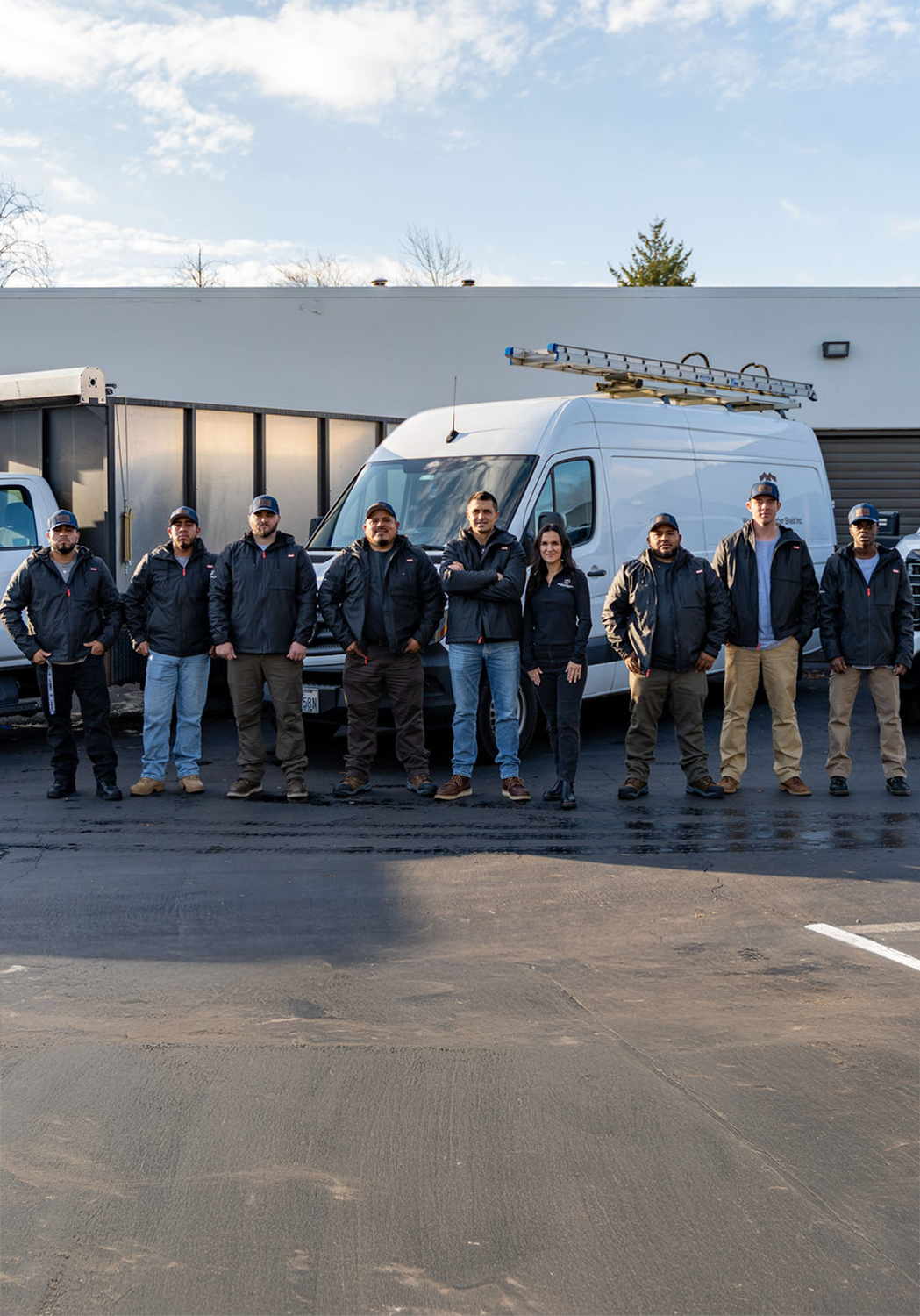
Meet the team behind your commercial roof construction project.
These are the systems we install, restore, and stand behind across the Greater Seattle area. Choose from single-ply membranes to walkable PVC decks, and other quality materials.
A lightweight and energy-efficient single-ply membrane ideal for flat or low-slope commercial roofs.
Durable, fire-resistant, and chemical-resistant single-ply membrane designed for long-term performance on flat and low-slope roofs.
Liquid-applied systems designed to restore, protect, and extend the lifespan of existing commercial roofs.
Long-lasting, fire-resistant, and low-maintenance panels known for their exceptional durability.
Flexible, synthetic rubber single-ply membrane with strong weather resistance and excellent long-term performance for commercial roofing.
Traditional, cost-effective asphalt shingle system reinforced with fiberglass mats, typically used on steep-slope commercial or multifamily buildings.
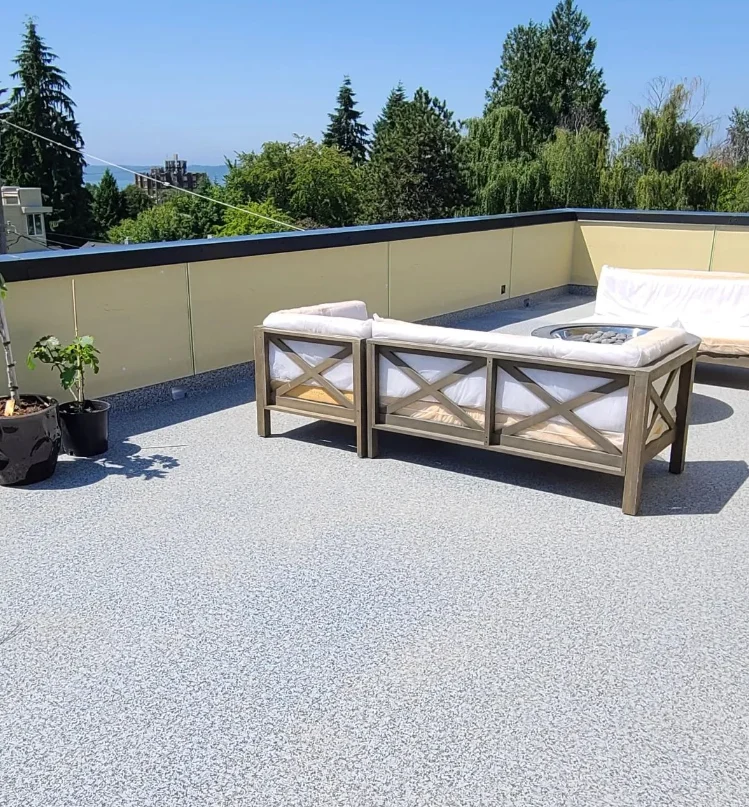
Walkable, waterproof PVC membrane commonly used for commercial decks, balconies, and roof patios over occupied spaces.
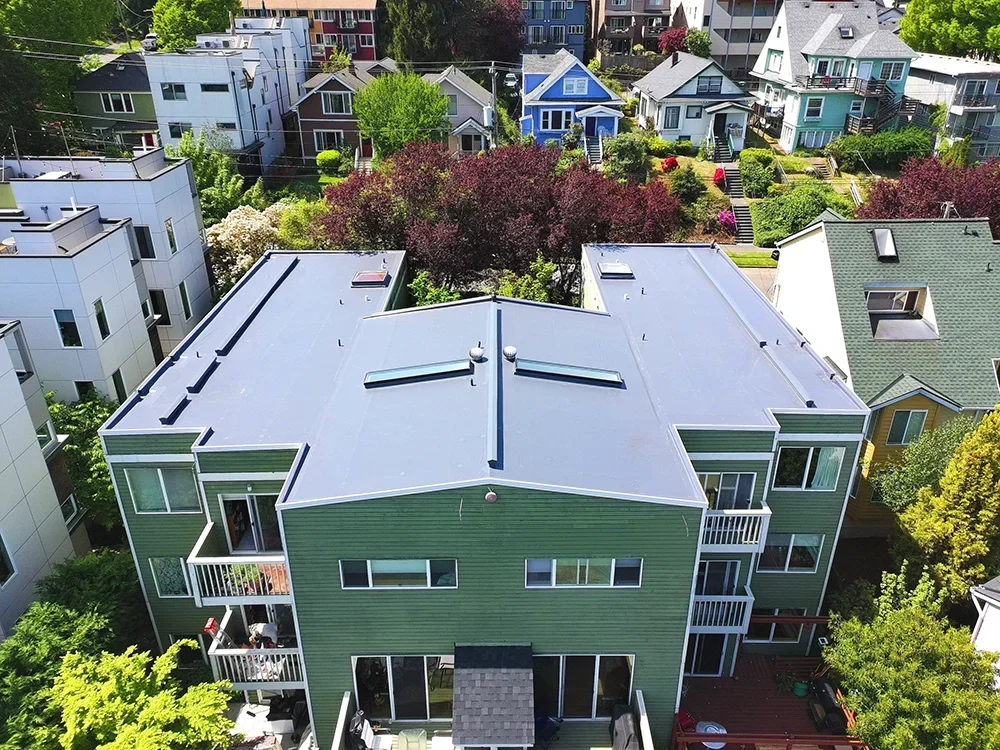
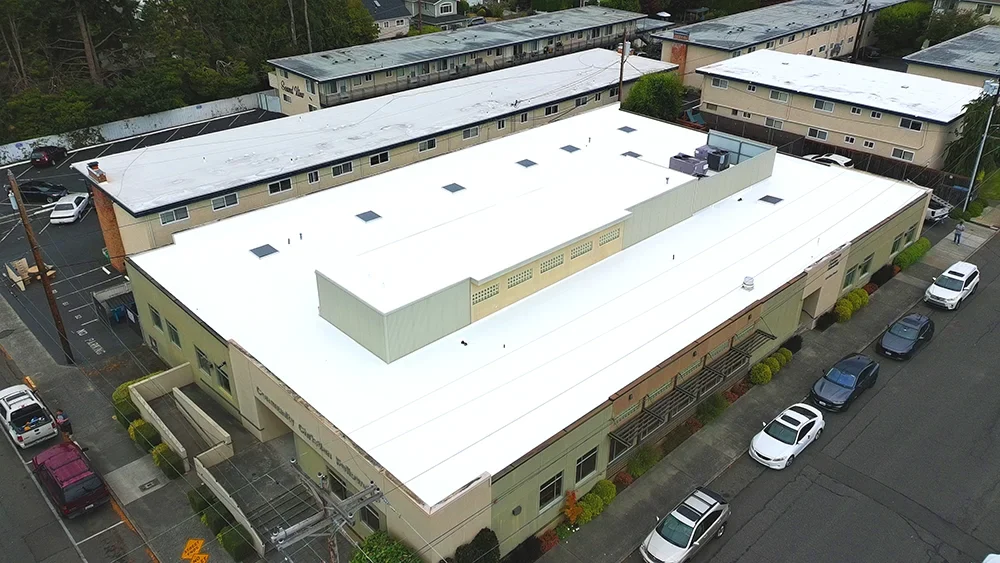
We’ve completed commercial and industrial roofing projects across Greater Seattle from warehouses and manufacturing facilities to retail and distribution centers. Here’s a look at some recent work we’ve completed.
Our GAF GoldElite™ certification allows us to provide manufacturer-backed warranties on qualifying commercial roofing systems in Tukwila. Depending on the system selected, warranty coverage may extend beyond 20 years.
Many commercial buildings in Tukwila need to remain open during roof work. Our Tenant-First Install Program helps stores, clinics, offices, and other occupied properties continue operating with less disruption.
We follow agreed quiet hours, clean the site each day, and notify tenants before each phase of work begins.
Commercial roofs we install in Tukwila are supported by our 24-hour leak response. If a covered roof develops a leak, our team returns quickly to inspect the issue and complete the required repair at no additional cost.
We have had zero emergency callbacks this year.
Portfolio Care helps Tukwila property owners and managers plan for every commercial roof they oversee. The program includes free roof audits, three-year capital planning, and priority scheduling across multiple properties.
This gives you a clearer view of upcoming repair and replacement needs before they become urgent.
When people search for the best commercial roofing company, they want steady communication and reliable results. See what Greater Seattle Area businesses say about working with us.
Providing commercial roofing services in Greater Seattle Area and surrounding communities. 47 cities across nine counties.
Tap a city to see it on the map.
It depends on shading, drainage design, and how much moss or debris the roof tends to collect. A post-winter cleaning after Tukwila’s wettest months is a reasonable default for most flat roofs here, and an inspection can confirm whether your roof needs it more or less often.
We start with dry mechanical removal wherever it is enough on its own, then bring in a licensed moss treatment when the growth warrants it. Washington treats roof moss control as a licensed pesticide activity, so any chemical product is applied by a WSDA Commercial Applicator with the runoff plan set before it starts.
The best method is the one your roof’s manufacturer allows and your drainage plan can contain, and that differs for TPO, PVC, EPDM, coatings, and metal systems. We check the manufacturer’s guidance for your specific system before choosing a pressure setting or cleaning agent.
Removing moss and organic growth reduces the moisture and weight sitting against the membrane, which is a meaningful part of what shortens a roof’s service life here. Keeping the surface and drains clear is one of the most direct ways to protect the years the system has left.
The wrong pressure setting or chemical can lift seams, strip a coating, or void a manufacturer warranty, and Tukwila’s stormwater rules govern where the wash water goes. A professional cleaning matches the method to your membrane, handles the runoff requirements, and documents the roof’s condition while the crew is up there.
Tukwila’s stormwater rules keep cleaning products and debris out of the storm drains. We block or disconnect downspouts before washing, route the water to an approved disposal path, and document where the collected water and debris went once the job is finished.
Industry cost guides put professional roof cleaning at an average of roughly $0.20 to $0.75 per square foot. Those are averages, and your final cost depends on roof size, how much moss and debris has accumulated, whether a licensed chemical treatment is needed, the runoff containment the job requires, and roof access. A free inspection turns those variables into a written, itemized price for your building.
Most commercial cleaning is priced by the square foot, and larger roofs typically earn a lower per-foot rate. Add-ons like licensed moss treatment and wash-water containment are itemized separately, so you can see exactly what drives the number.
Yes. Washington Weather Shield provides written estimates and detailed scopes of work for commercial roofing construction, repairs, maintenance, and roof replacement projects. Our proposals clearly outline the recommended system, project scope, and warranty options so you know exactly what to expect.
At Washington Weather Shield, all commercial roofing contracts must be signed prior to the start of the project. For commercial roof maintenance and cleaning services, full payment is due upon completion of the work. All pricing, payment terms, and service details are outlined in the estimate or confirmed in electronic writing prior to scheduling.
Yes. Washington Weather Shield is fully licensed, and our commercial roofing team is trained and certified to install roofing systems using manufacturer-approved methods for long-term performance and warranty compliance. We are certified with top commercial roofing manufacturers, including GAF (TPO & PVC), Versico (TPO & PVC), Duro-Last (PVC), and GE Enduris—and we’re especially proud to hold GAF GoldElite™ Commercial Contractor status, a highly selective certification level.
At Washington Weather Shield, our commercial roofing crews complete ongoing hands-on training each year to stay current on the latest installation methods, safety standards, and manufacturer requirements. This includes training and education through top roofing manufacturers such as GAF (TPO & PVC), Versico (TPO & PVC), Duro-Last (PVC), and GE Enduris, helping ensure every roof we install meets professional standards and warranty guidelines.
A qualified commercial roofer should have proven experience with commercial flat and low-slope roofing, proper licensing and insurance, strong safety practices, and the ability to provide detailed scopes, references, and warranty options. At Washington Weather Shield, we meet these standards through our commercial roofing expertise, manufacturer certifications, and our commitment to professional installation methods and long-term roof performance.
Get a clear, straightforward Tukwila commercial roofing estimate with transparent pricing and a plan that fits your schedule.
Our commercial roofing contractor team makes the process simple so you can move forward with confidence and keep your property protected.