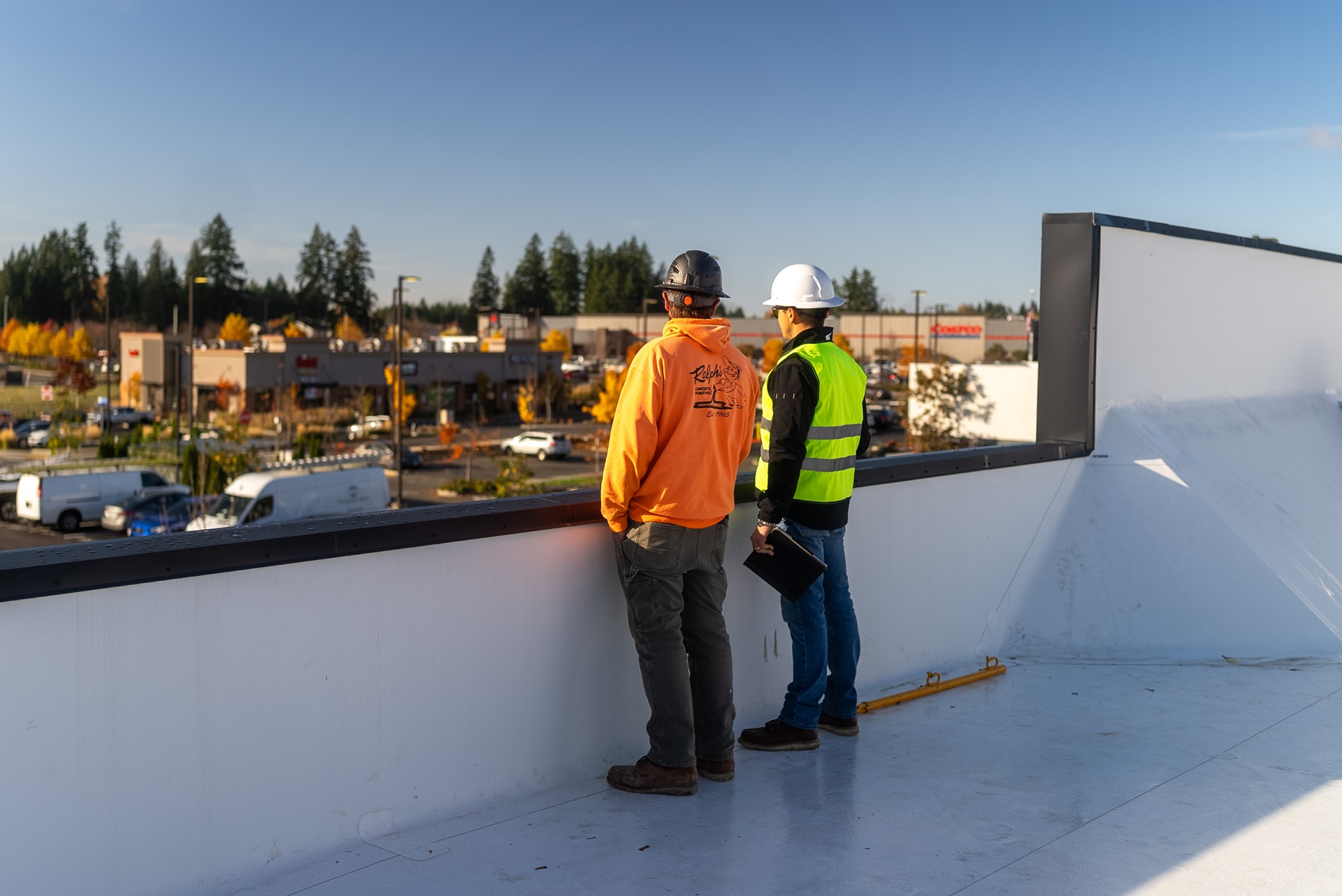
Commercial PVC Roofing
Commercial PVC Roofing Company in Seattle You Can Count On
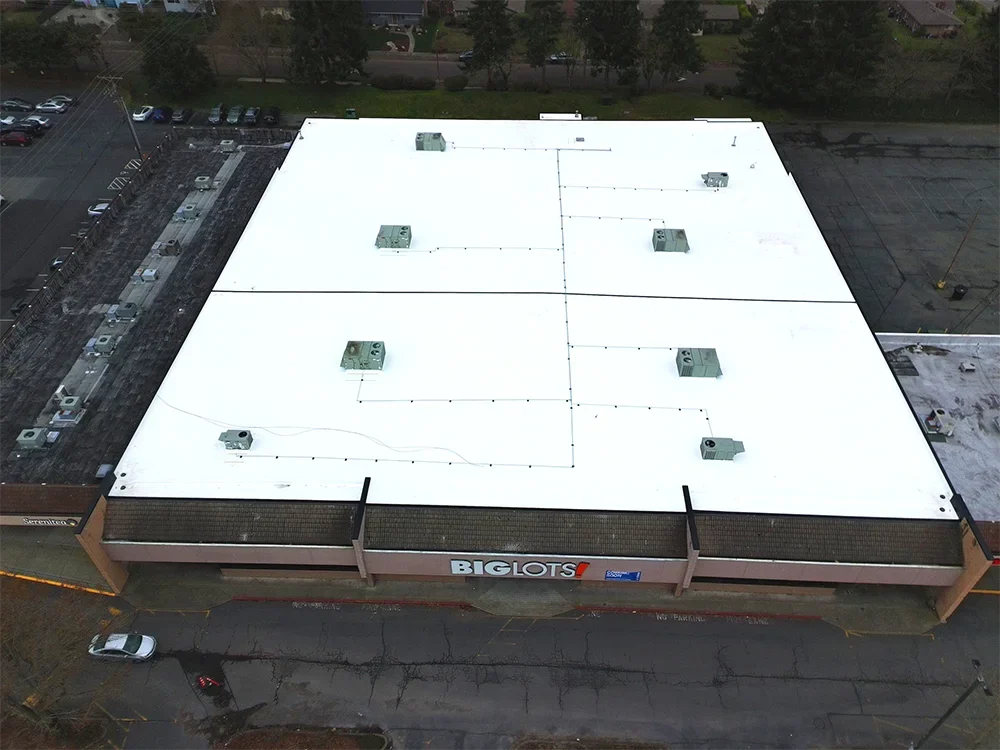
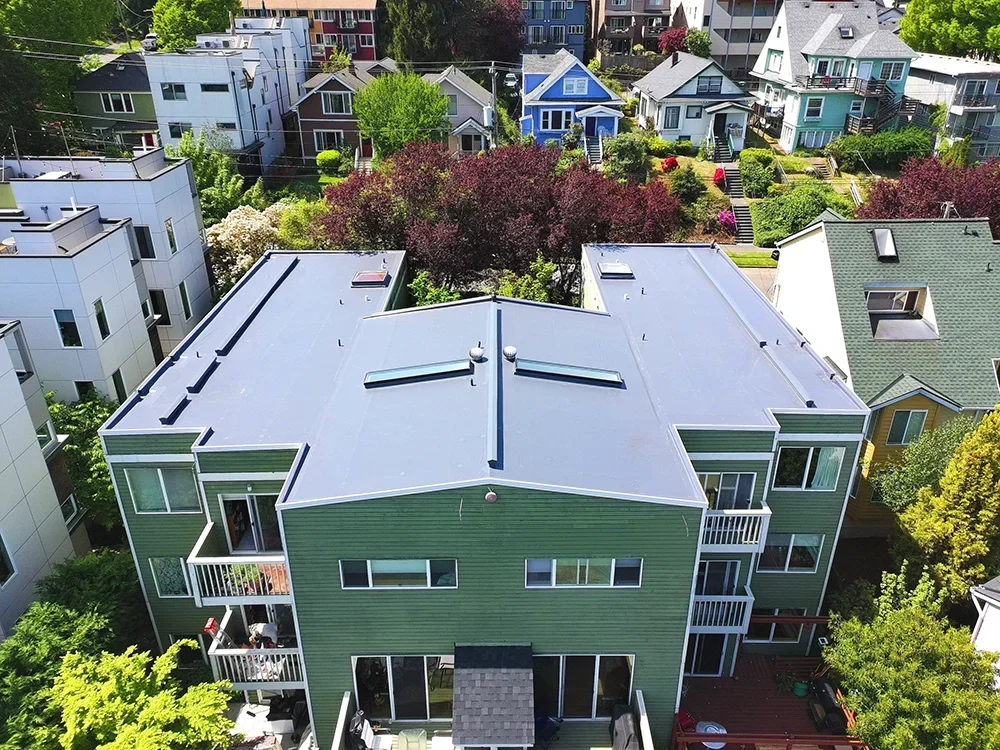
Our Seattle PVC roofing company installs high-performance PVC roofing systems for commercial and industrial properties throughout the Greater Seattle area.
Request a Free Estimate
PVC roofing built for long-term performance
Our Seattle PVC roofing company installs high-performance PVC systems with clear communication and predictable timelines.
Why Choose Our Commercial PVC Roofing Company
The difference between PVC roofing companies is often found in the details — preparation, installation quality, communication, and follow-through.
Here is what sets our work apart.
Leak-Free Performance Pledge
Documented QA to promote consistent installation quality and dependable leak protection.

Portfolio Care for PMs & Owners
Free roof audits, 3-year capital planning, and priority scheduling across your properties.

Clean Site Guarantee
Walkways kept clear, common areas protected, and daily cleanup completed to maintain a tidy, professional jobsite.

On-Time, On-Budget Scorecard
Transparent milestones, change orders, and progress photos. We start when promised and finish as bid.

Certified Crews, Modern Systems
Authorized installation of premium commercial roofing systems backed by ongoing training.

Warranty & Protection
20–30 year manufacturer warranties for qualifying new roof installs. See our Warranty & Protection page for more details.
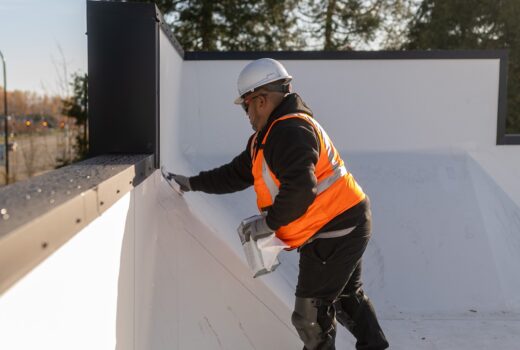
Commercial PVC Roofing System Options
Our commercial PVC roofing in Seattle follows a clear, documented process. We provide a full range of commercial PVC roofing installation and service solutions across the Puget Sound region. Whether managing a single property or a broader portfolio, our work is scheduled and coordinated with occupied buildings in mind, with clear scope development and transparent pricing.
Mechanically Attached PVC Roofing — Secured to the roof deck using fasteners and plates beneath the membrane seams. A practical, cost-effective option for many low-slope commercial buildings and one of the most common PVC assembly types.
Fully Adhered PVC Roofing — Bonded directly to the substrate across the roof surface for a smooth appearance and strong overall attachment. Often selected for enhanced wind uplift performance and a more uniform finished look.
Induction-Welded PVC Roofing — Secures the membrane at concealed attachment points using induction welding technology, providing a clean appearance, strong attachment, and reduced membrane flutter on some projects.
Fleece-Back PVC Roofing — Includes a reinforced fleece backing that can improve puncture resistance, flexibility, and compatibility with certain recover applications. Installable in adhered and mechanically attached configurations.
Final Cleanup and Jobsite Reset
Ongoing daily cleanup throughout the project and a final walkthrough to ensure the jobsite is clean, safe, and ready for normal operations.
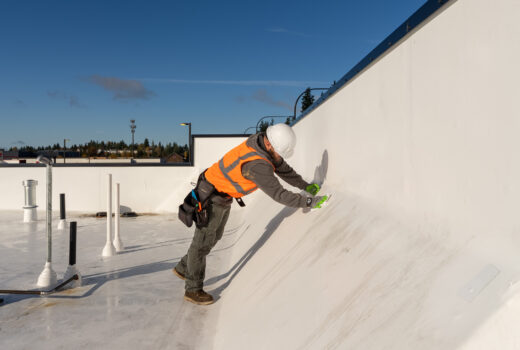
Drainage and Gutter Improvements
Ensuring water moves off the roof properly to prevent ponding and future issues.
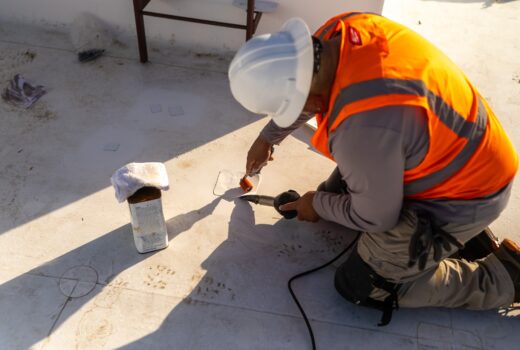
Flashing and Edge Metal Upgrades
Replacement or integration of flashing, edge metal, and penetration details to strengthen perimeter protection and support long-term leak prevention on commercial roof replacements.
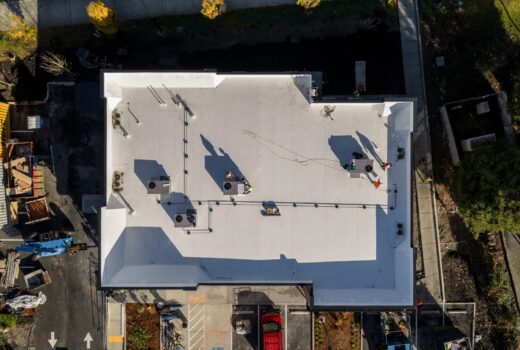
New Roofing System Installation
Installation of the new commercial roofing system using certified methods and manufacturer-approved details, completed by an experienced commercial roof replacement contractor.
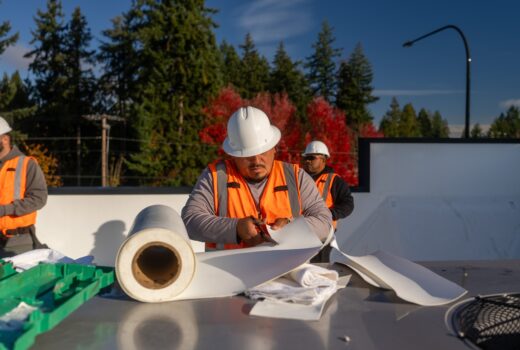
Substrate and Deck Evaluation & Repair
During commercial flat roof replacement, decking, insulation, and structural elements are evaluated and repaired as necessary to support the new roofing system, whether installed as a tear-off or overlay.
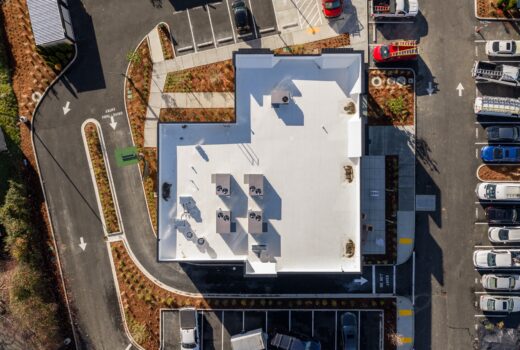
Roof Preparation and Selective Removal
When we replace a commercial roof, our approach depends on existing conditions and system design. Projects may involve a full tear-off or selective removal to properly prepare the roof, with clean, controlled debris handling to protect the building and surrounding areas.
Additional Commercial Roofing Services to Support Your Property
A commercial PVC roofing system is only one part of your building’s long-term performance strategy.
As a commercial roofing partner serving the Puget Sound, we support ongoing planning, maintenance, and system upgrades across your properties. Here are the commercial roofing services we perform:
Commercial Roof Replacement
Full replacements for aging and failing commercial roofs.
- Tear-off and re-roof options
- Code-compliant installation practices
- Long-term performance materials
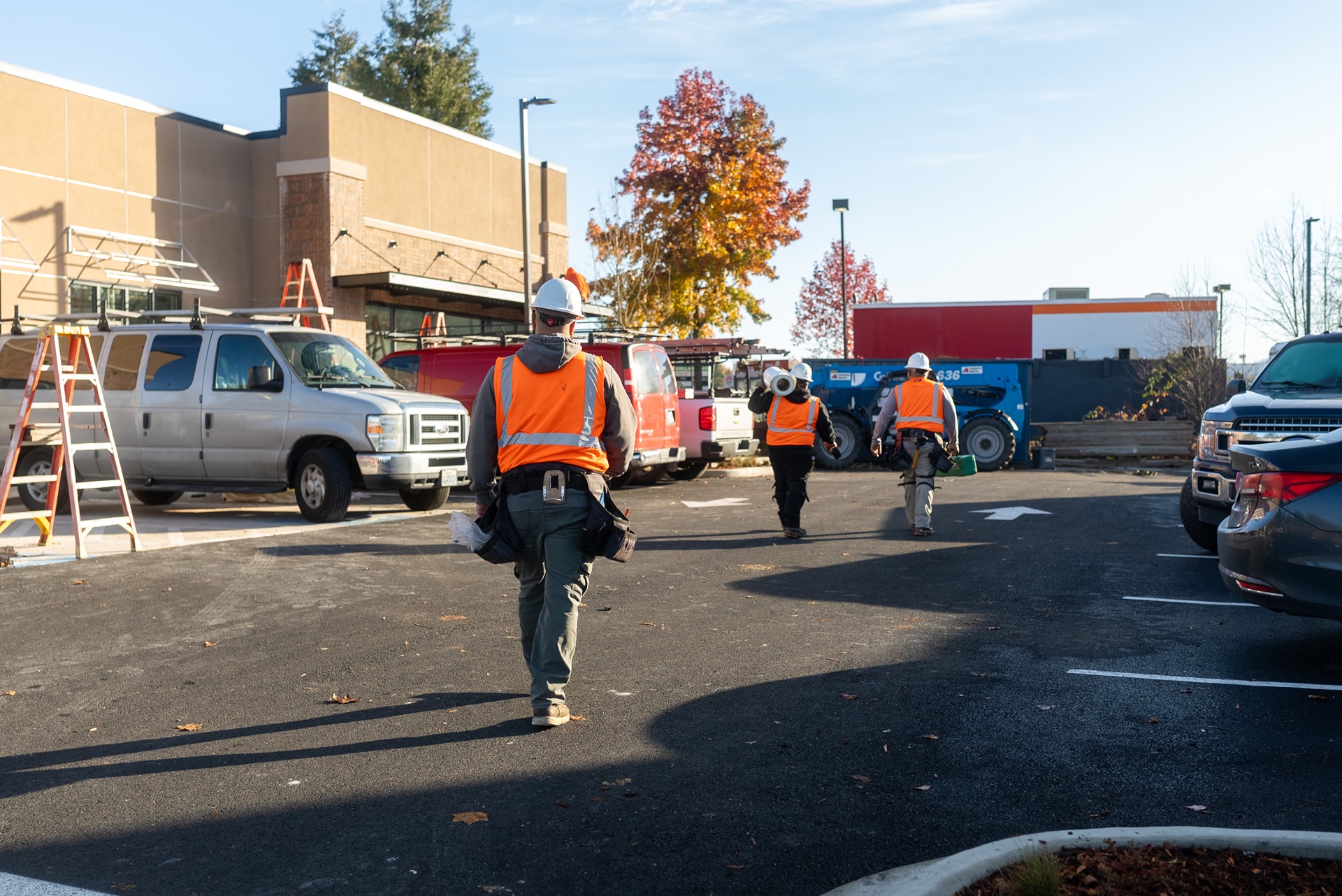
Commercial Roof Repair
Targeted commercial roofing fixes that stop leaks and prevent further damage.
- Leak patching
- Flashing and membrane repairs
- Storm and impact damage repair
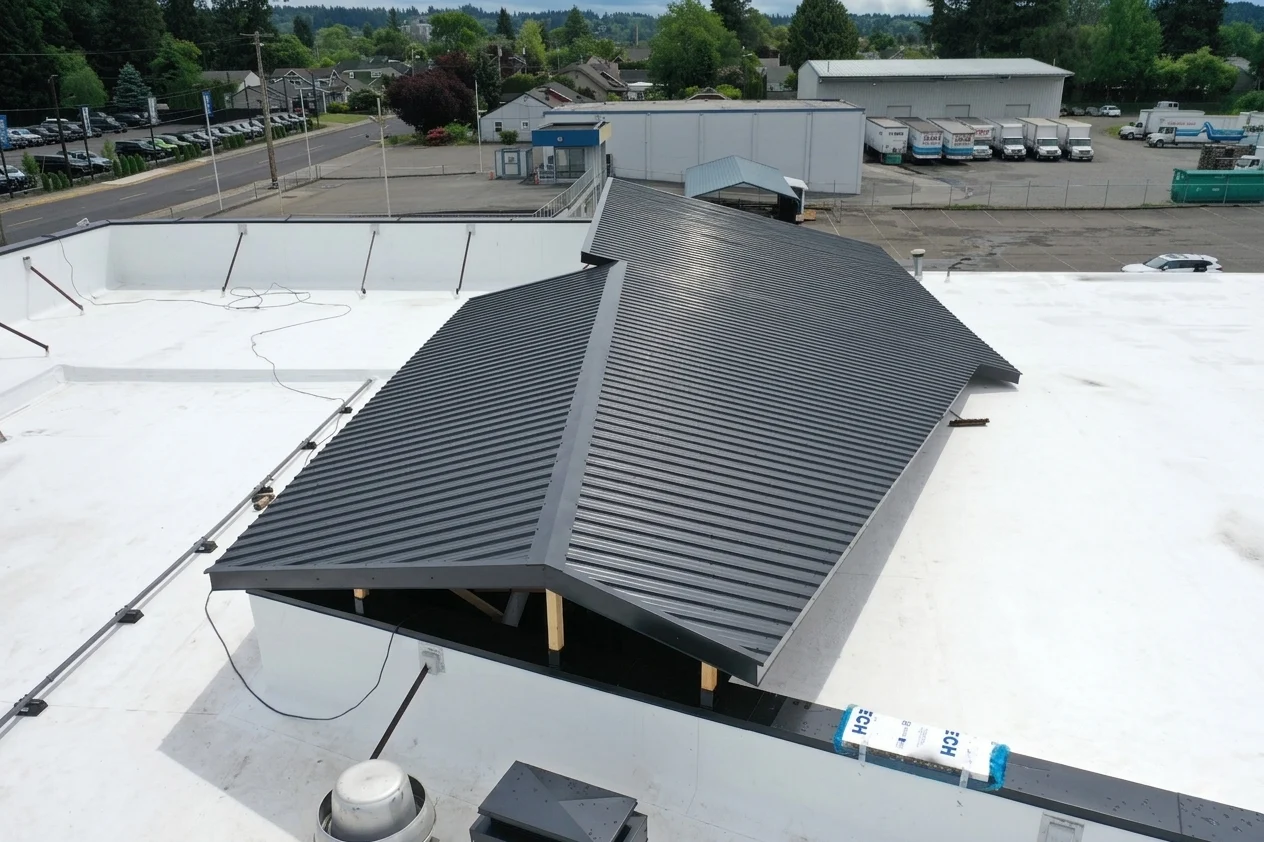
Commercial Roof Construction
New roofing systems for commercial building projects.
- Roofing for new commercial construction
- TPO, PVC, metal, and low-slope systems
- Drainage and slope planning
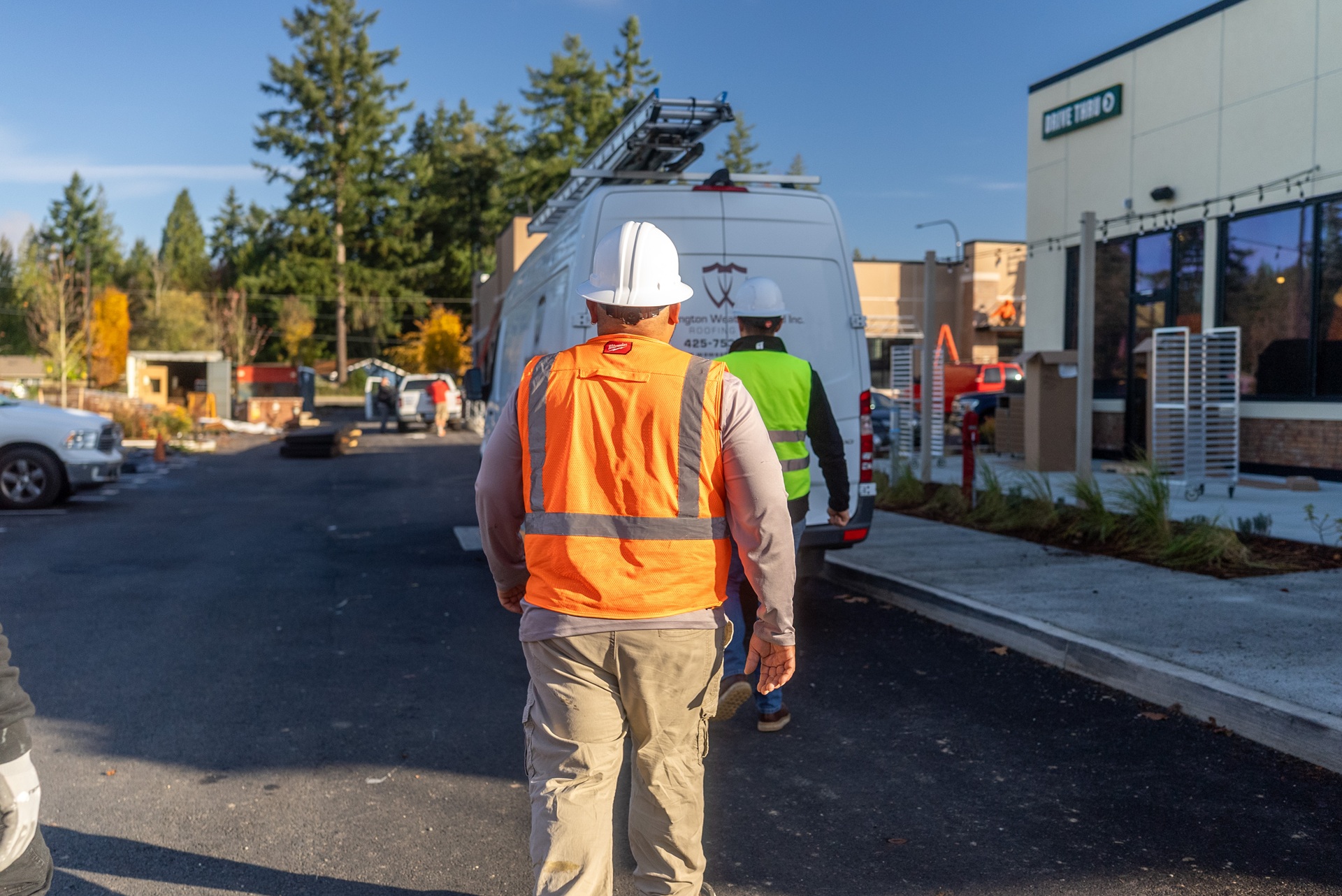
Commercial Roof Cleaning
Routine roof cleaning to protect drainage and extend roof life.
- Debris removal and surface clearing
- Gutter and scupper checks
- Condition notes for future planning
Commercial Roof Insulation
Roof insulation upgrades that improve energy performance and code compliance.
- Tapered insulation and drainage design
- Cover board installation
- Energy-efficiency improvements
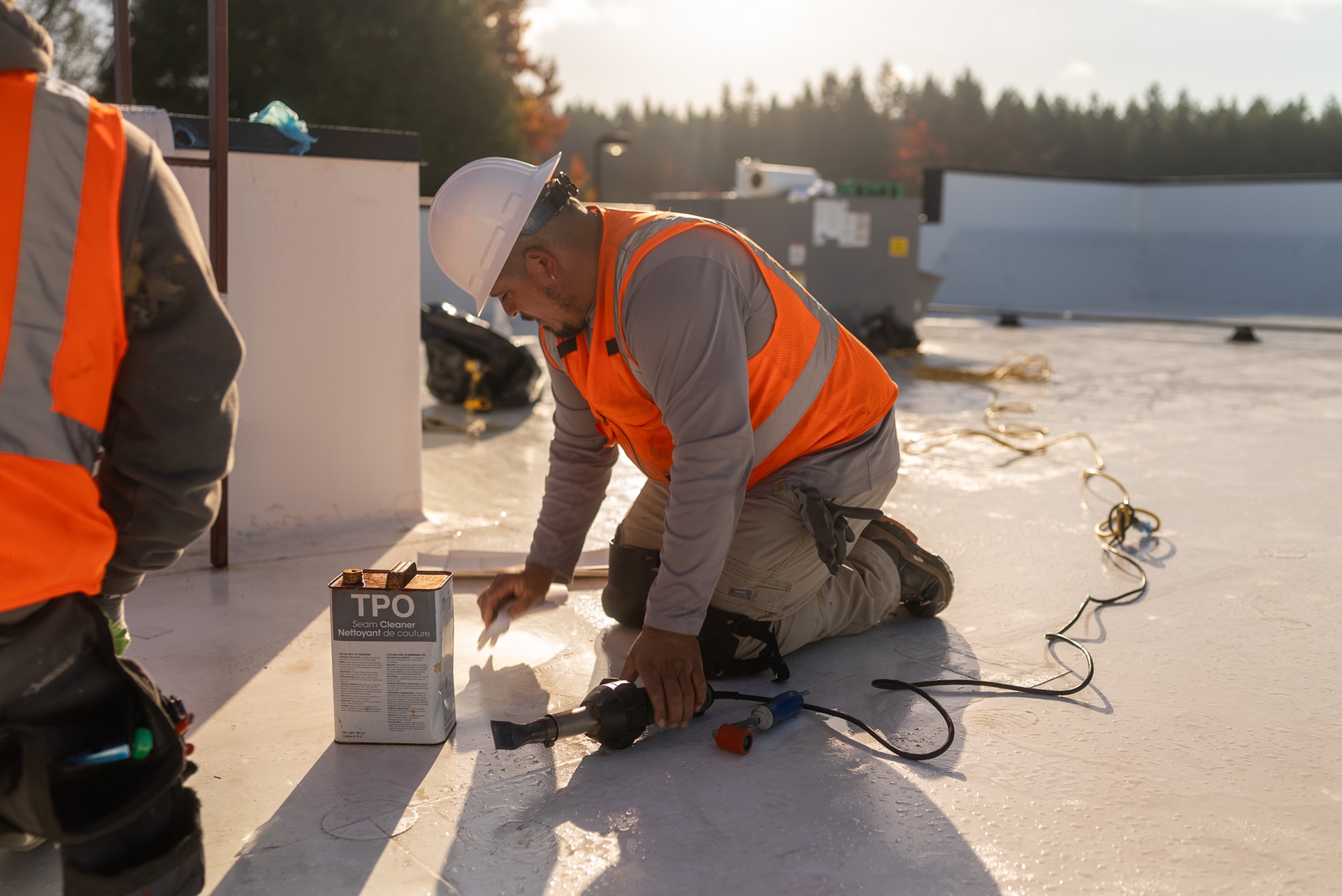
Commercial Roof Maintenance
Routine maintenance that catches issues early and extends roof life.
- Seasonal inspections
- Minor repairs and sealant work
- Clear reports for asset planning
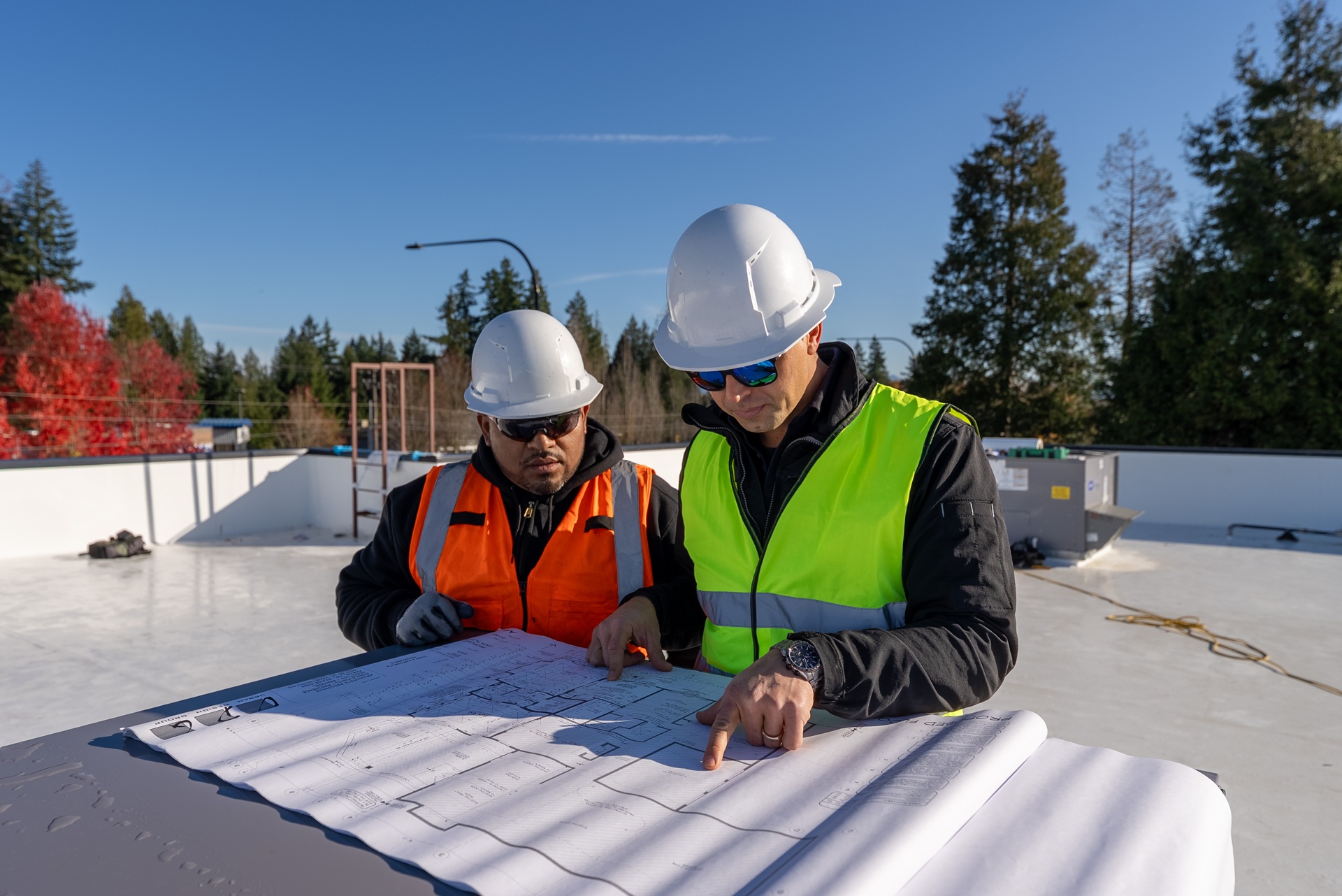
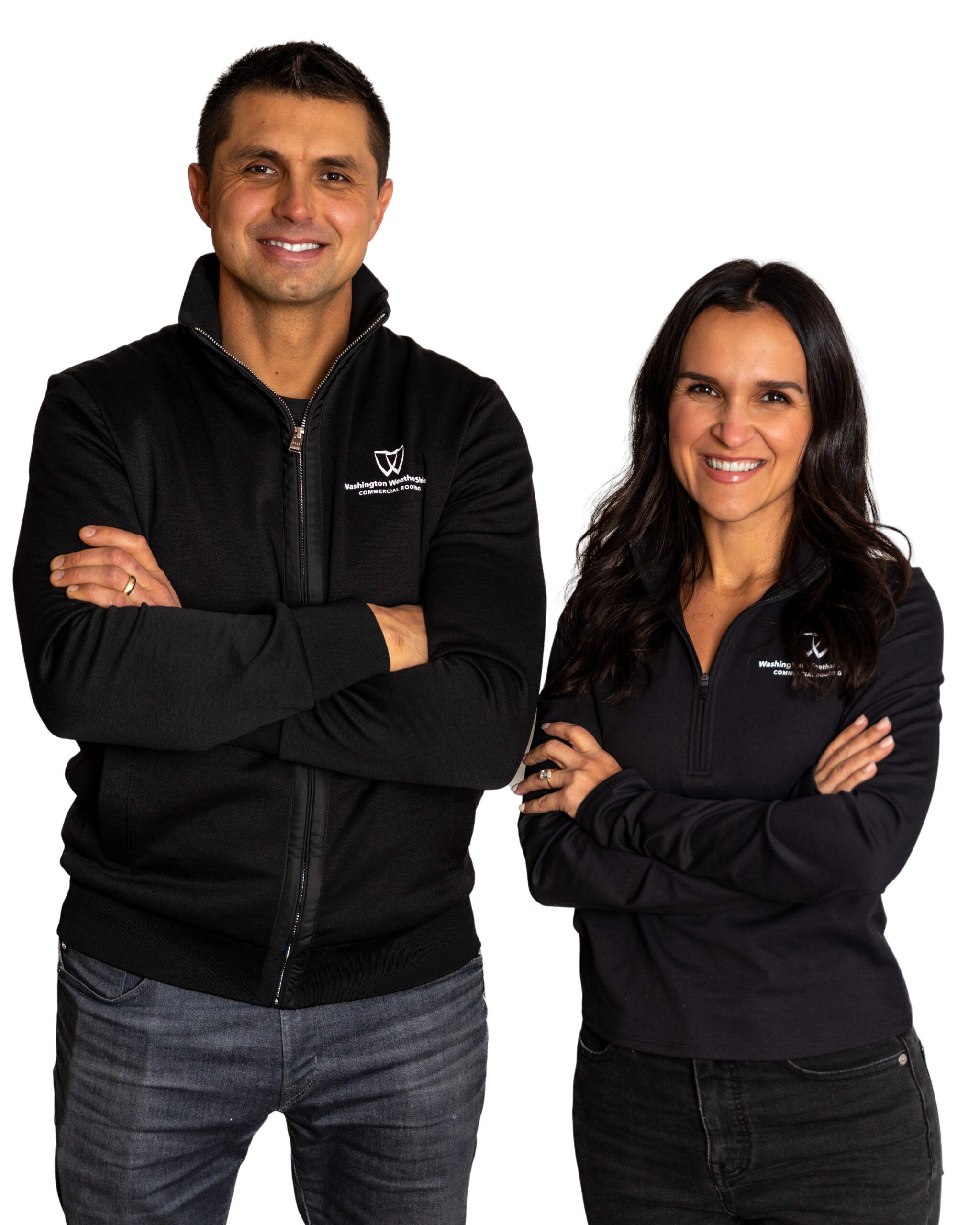
Meet Your Greater Seattle Commercial PVC Roofing Team
Meet the team behind your Seattle PVC roofing project.
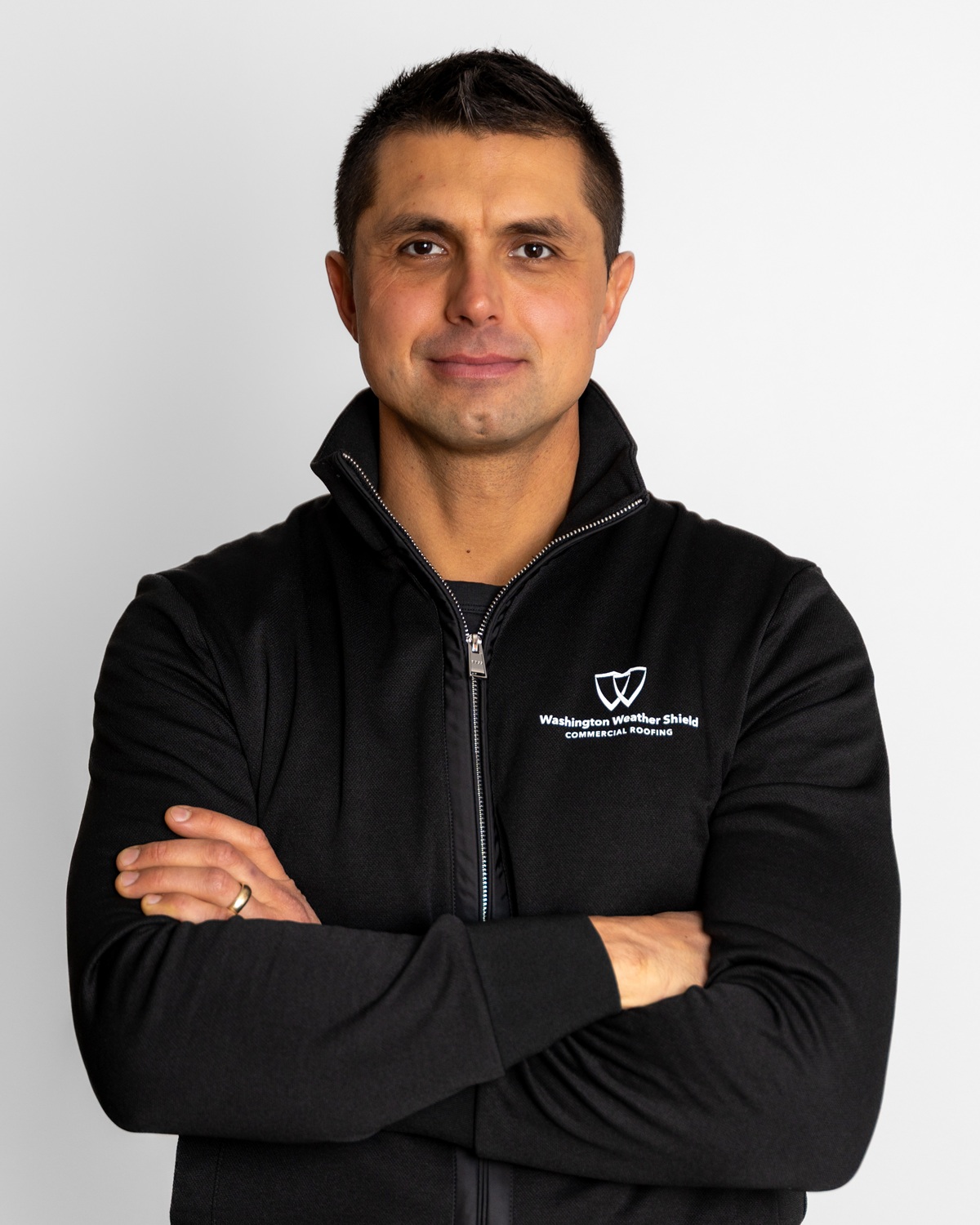
Ivan Prokopets
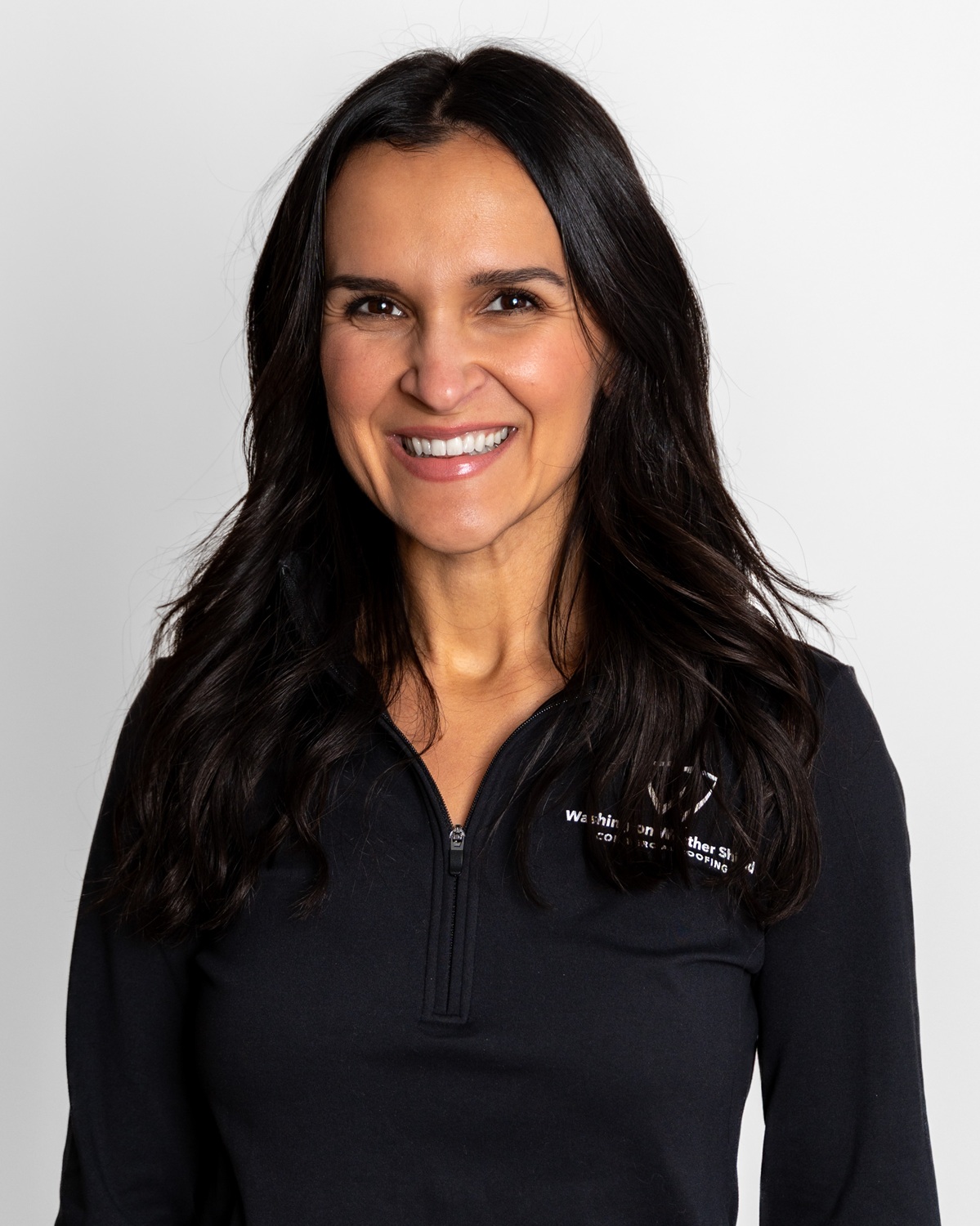
Rita Prokopets
Washington Weather Shield Team
Our Process for Commercial PVC Roof Installation
Our process is built to keep commercial PVC roof installation clear and predictable. You get a defined scope, steady communication, and a team that keeps the project moving without creating extra work for your side. Here’s how we move from planning to completion.
Step 1: Schedule Your Free Roof System Evaluation
We visit the property, evaluate the existing conditions or project plans, and document current conditions with photos while identifying what your commercial PVC roofing project needs to move forward properly.

Step 2: Approve Your Scope and Project Plan
You receive a clear estimate, recommended scope of work, and timeline so expectations are established before the work begins.

Step 3: Installation, QA, and Project Closeout
Our crew completes the work, manages cleanup, and keeps you updated throughout the project. At closeout, you receive the documentation needed for warranty support and future roof planning.
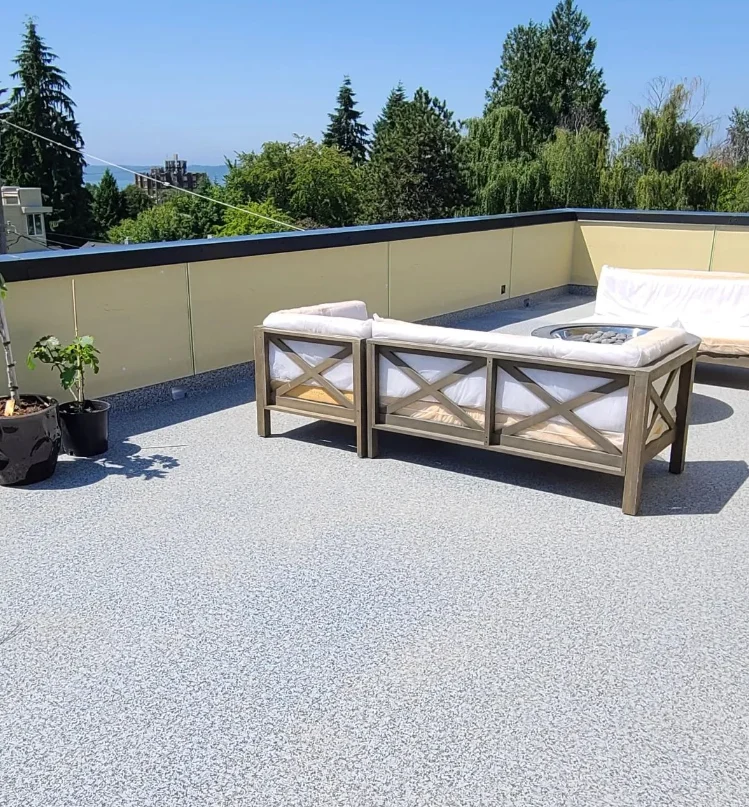
Why Commercial PVC Roofing Is a Smart Investment
Commercial PVC roofing is often selected for flat and low-slope buildings because it combines heat-welded seam performance, durable membrane protection, and long-term waterproofing reliability. PVC roofing systems are especially valued for their ability to handle moisture exposure, UV weathering, and demanding rooftop conditions over time.
When properly designed and installed, a commercial PVC roofing system supports heat-welded seams for long-term waterproofing, reflective membrane performance for cooler roof surfaces, strong resistance to moisture and UV, and dependable long-term performance with extended warranty options — meaning fewer disruptions and lower long-term maintenance concerns.
Client Testimonials
Our work is measured not just in completed roofs, but in the confidence property managers, owners, and contractors feel throughout the process. These testimonials reflect that commitment.
I hired Ivan for a TPO roofing project, and I couldn’t be happier with the results. He stepped in on very short notice right before the rain was coming, which helped us avoid major issues. His work was professional, clean, and done exactly the way it needed to be.
Roman Gural
Washington Weather Shield replaced a metal and PVC roof on one of our custom Mercer Island homes and did an excellent job. Great communication, skilled crew, and top-quality work from start to finish. Highly recommend!
Remont Construction

Excellent roofing company! Washington Weather Shield just did an apartment building for us. Definitely our go to roofer going forward. Delivered a superior product in a timely manner and on budget as promised. Super professional every step of the way and great communication. Thank you Washington Weather Shield! Highly recommended! A++++
Mark Caldwell
What Clients Say About Our Roofing Work
When people search for a local commercial roof replacement company, they want steady communication and reliable results. See what Seattle businesses say about working with our commercial roofers.
Commercial PVC Roofing FAQs
What are the issues with PVC roofing?
Most PVC roofing issues are related to improper installation rather than the membrane itself. Poor seam welding, flashing details, drainage problems, and incorrect attachment methods can all affect long-term performance, which is why working with experienced PVC roofing contractors matters.
PVC roofing systems also require proper detailing around penetrations, rooftop equipment, and transitions to maintain watertight protection. When properly designed and installed, PVC roofing is considered one of the most durable and dependable options for flat and low-slope commercial buildings.
What is PVC roofing?
PVC roofing is a single-ply thermoplastic membrane commonly used on flat and low-slope commercial buildings. A commercial PVC roofing system is known for heat-welded seams, durable waterproofing performance, and long-term resistance to weathering, UV exposure, and moisture.
What is better, PVC or polycarbonate roof?
PVC and polycarbonate are designed for very different applications. PVC commercial roofing is a waterproof membrane system commonly used on flat and low-slope commercial buildings, while polycarbonate is typically used for translucent panels, skylights, covers, and daylighting assemblies.
For most flat and low-slope commercial roof installation projects, PVC roofing is the more relevant and durable roofing system option.
How long will a PVC roof last?
A properly installed and maintained PVC roof can last 20 to 30 years or more, depending on the membrane quality, roof design, drainage, weather exposure, and ongoing maintenance. Because installation quality plays a major role in long-term performance, many property owners carefully compare PVC roofing companies, warranty options, and manufacturer certifications before moving forward with a roof replacement.
What goes under a PVC roof?
What goes under a PVC roof depends on the roof assembly, but it commonly includes the roof deck, insulation, and a cover board beneath the PVC membrane. In some commercial PVC roofing projects, additional components may be included depending on the building design, attachment method, energy requirements, and overall roofing system performance goals.
Can a new PVC roof be installed over an existing roof?
Sometimes, yes. In some commercial PVC roofing projects, a new roofing system can be installed over an existing roof if the current assembly is dry, structurally sound, and meets code requirements for a recover system. However, if the roof has trapped moisture, significant deterioration, or too many existing roof layers, a full tear-off may be required before the new PVC roofing system can be installed.
How is a commercial PVC roof installed?
Commercial PVC roof installation can be used for new construction, full roof replacement, or approved recover applications, depending on the existing roof and project requirements. The process usually starts with preparing the roof deck or substrate, then installing insulation and cover board layers as needed for the new PVC roofing system.
The membrane is then installed based on manufacturer specifications, with close attention to attachment, seam welding, flashing, drains, penetrations, and roof edges. The exact method depends on the roof design, building conditions, and code requirements.
Can a general contractor do roofing in Washington state?
In Washington state, roofing work must be performed by contractors who are properly licensed and insured for roofing services. Some general contractors may hold the appropriate licensing to perform roofing work, but many projects — especially commercial roofing — are completed by specialty roofing contractors due to the technical requirements, manufacturer installation standards, and warranty considerations involved.
What affects the cost of a commercial PVC roofing project?
The cost of a commercial PVC roofing project depends on several factors. Pricing is influenced by the size and condition of the roof, the type of PVC roofing system selected, and the performance requirements of the project.
Common factors that affect cost include:
- Roof size (total square footage) and building configuration
- Type of PVC roofing system selected
- Tear-off vs recover/retrofit installation
- Insulation upgrades and code compliance requirements
- Drainage improvements such as crickets, additional drains, scuppers, or ponding corrections
- Roof complexity, including curbs, skylights, parapets, penetrations, and rooftop equipment
- Site access and staging requirements, such as lifts, cranes, and material loading zones
- Occupancy considerations, including tenant coordination, work hour limitations, and protection of operations
- Warranty level and manufacturer system requirements for qualifying coverage
- Roof deck repairs if deterioration is discovered during tear-off or preparation
For the most accurate pricing, Washington Weather Shield recommends scheduling a roof inspection to evaluate your specific roof and project needs.
Do you offer written estimates and detailed scopes of work?
Yes. Washington Weather Shield provides written estimates and detailed scopes of work for commercial roofing construction, repairs, maintenance, and roof replacement projects. Our proposals clearly outline the recommended system, project scope, and warranty options so you know exactly what to expect.
How are contracts and payment schedules handled for projects, including new construction roofing?
At Washington Weather Shield, all commercial roofing contracts must be signed prior to the start of the project. Our standard payment schedule is 50% upfront to order materials and secure your installation dates on our calendar, with the remaining 50% due upon completion of the project. For larger commercial roofing projects, progress payments may be requested during the duration of the work, depending on the size and scope.
Are your commercial roofing contractors licensed and certified?
Yes. Washington Weather Shield is fully licensed, and our commercial roofing team is trained and certified to install roofing systems using manufacturer-approved methods for long-term performance and warranty compliance. We are certified with top commercial roofing manufacturers, including GAF (TPO & PVC), Versico (TPO & PVC), Duro-Last (PVC), and GE Enduris—and we’re especially proud to hold GAF GoldElite™ Commercial Contractor status, a highly selective certification level.
What training do your roofing crews receive each year?
At Washington Weather Shield, our commercial roofing crews complete ongoing hands-on training to stay current on the latest installation methods, safety standards, and manufacturer requirements. This includes training and education through top roofing manufacturers such as GAF (TPO & PVC), Versico (TPO & PVC), Duro-Last (PVC), and GE Enduris, helping ensure every roof we install meets professional standards and warranty guidelines.
Do you work with manufacturer-backed roofing systems?
Yes. Washington Weather Shield installs manufacturer-backed commercial PVC roofing systems from trusted manufacturers including Duro-Last and GAF. Our roofing systems are installed using manufacturer-approved materials and application methods to support long-term performance and warranty eligibility.
How do I know I’m hiring a qualified commercial roofer?
A qualified commercial roofer should have proven experience with commercial flat and low-slope roofing, proper licensing and insurance, strong safety practices, and the ability to provide detailed scopes, references, and warranty options. At Washington Weather Shield, we meet these standards through our commercial roofing expertise, manufacturer certifications, and our commitment to professional installation methods and long-term roof performance.
Do you handle commercial new construction roofing as part of larger builds?
Yes. We take on select commercial new construction roofing projects when they align with our scope and scheduling. We work with general contractors, architects, and other trades to coordinate installation with project sequencing and code requirements.
Our Service Areas
Providing commercial roofing services in Seattle and surrounding communities — 47 cities across nine counties.
Tap a city to see it on the map.
Cities
- Seattle
- Tukwila
- Bellevue
- Renton
- Kent
- Auburn
- Federal Way
- Redmond
- Kirkland
- Bothell
- Everett
- Lynnwood
- Edmonds
- Mountlake Terrace
- Shoreline
- Burien
- SeaTac
- Des Moines
- Issaquah
- Sammamish
- Mercer Island
- Newcastle
- Maple Valley
- Covington
- Black Diamond
- Snoqualmie
- North Bend
- Carnation
- Duvall
- Woodinville
- Mill Creek
- Lake Forest Park
- Kenmore
- Fife
- Milton
- Puyallup
- Sumner
- Bonney Lake
- Lakewood
- University Place
- Steilacoom
- Gig Harbor
- Bremerton
- Port Orchard
- Silverdale
- Olympia
- Lacey
Counties We Serve
Our Service Areas
Providing commercial roofing services in the Puget Sound and Greater Seattle areas.
- Bellevue
- Seattle
- Tacoma
- Kent
- Renton
- Federal Way
- Auburn
- Redmond
- Olympia
- Kirkland
- Tukwila
- Puyallup
- Lakewood
- Burien
- SeaTac
- Everett
- Chehalis
- Bellingham
- Marysville
- Lacey
- Des Moines
- Kenmore
- Black Diamond
- Sumner
- Sammamish
- Shoreline
- Bothell
- Bremerton
- Edmonds
- Lynnwood
- Issaquah
- Parkland
- University Place
- Spanaway
- Maple Valley
- Mercer Island
- Covington
- Mukilteo
- Centralia
- Enumclaw
- Snoqualmie
- Gig Harbor
- Fife
- Shelton
- Milton
- Pacific
- Bonney Lake
Working Project
Finished Project
Connect with an Experienced Seattle PVC Roofing Contractor for Your Commercial Property
If you are planning a commercial PVC roofing project in Seattle, start with a clear scope and a team that understands how to keep the process organized. Washington Weather Shield will review your property, answer your questions, and help you move forward with a roofing plan built for long-term performance.